How to Digitise Your Garage Without Spending a Fortune
Most independent garages run on a patchwork of paper, spreadsheets, personal phones, and whatever system the previous owner installed in 2014. Going digital doesn’t mean buying five separate tools and spending six months learning them. Here’s how to digitise your garage operations with one system, realistic costs, and a transition that takes days, not months.
The typical UK garage in 2026 uses a paper diary for bookings, a separate invoicing system (or Word templates), WhatsApp on Chloe’s personal phone for customer messages, an Excel spreadsheet for tracking MOT due dates, and a filing cabinet for job cards. That’s five disconnected systems. None of them talk to each other. None of them give you a complete picture of your workshop.
And every one of them is a bottleneck. The diary doesn’t tell you which bay is free. The invoice doesn’t link to the job card. The WhatsApp conversation doesn’t appear in the customer record. The spreadsheet is only as good as whoever remembered to update it last Friday.
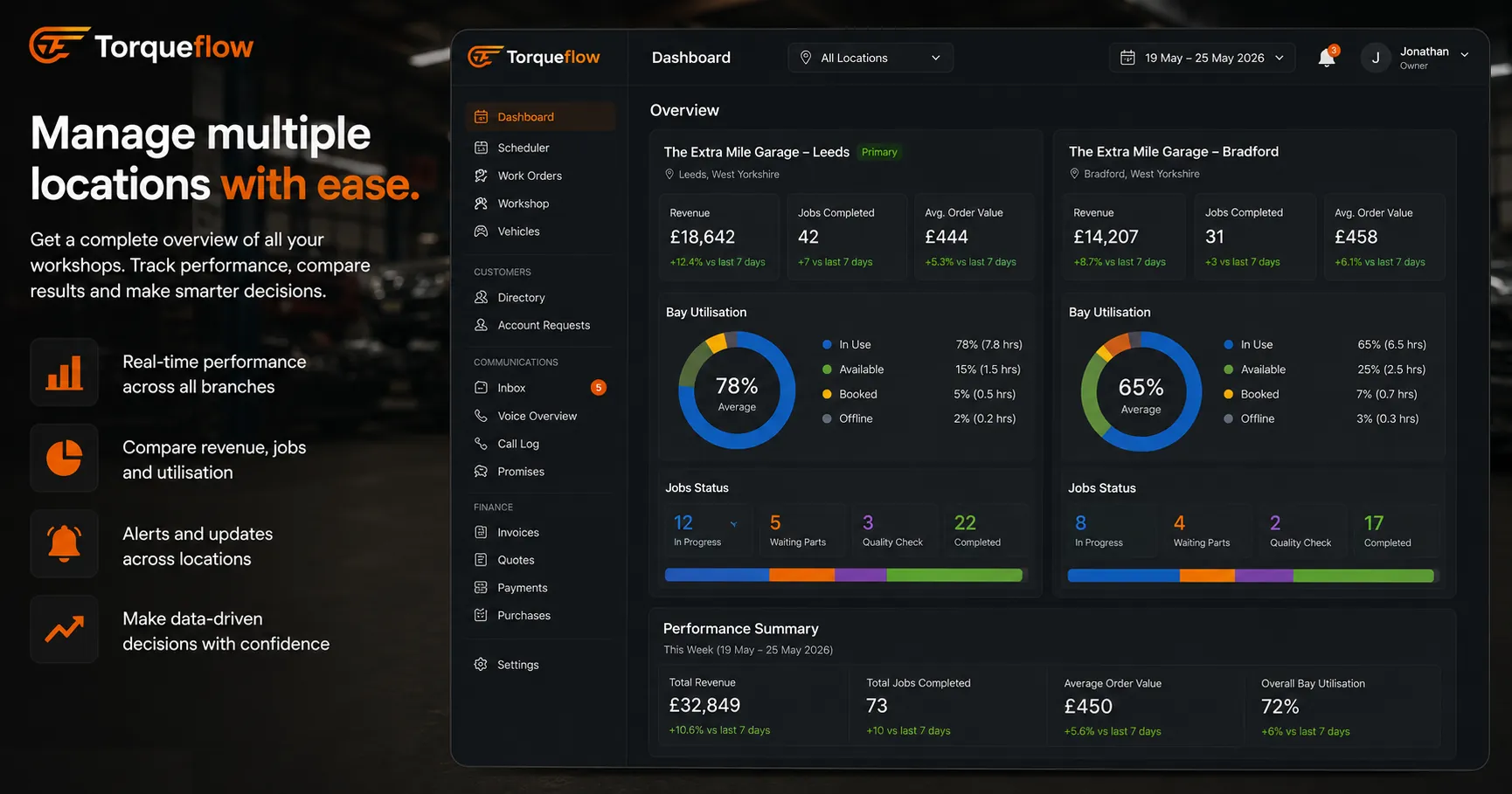
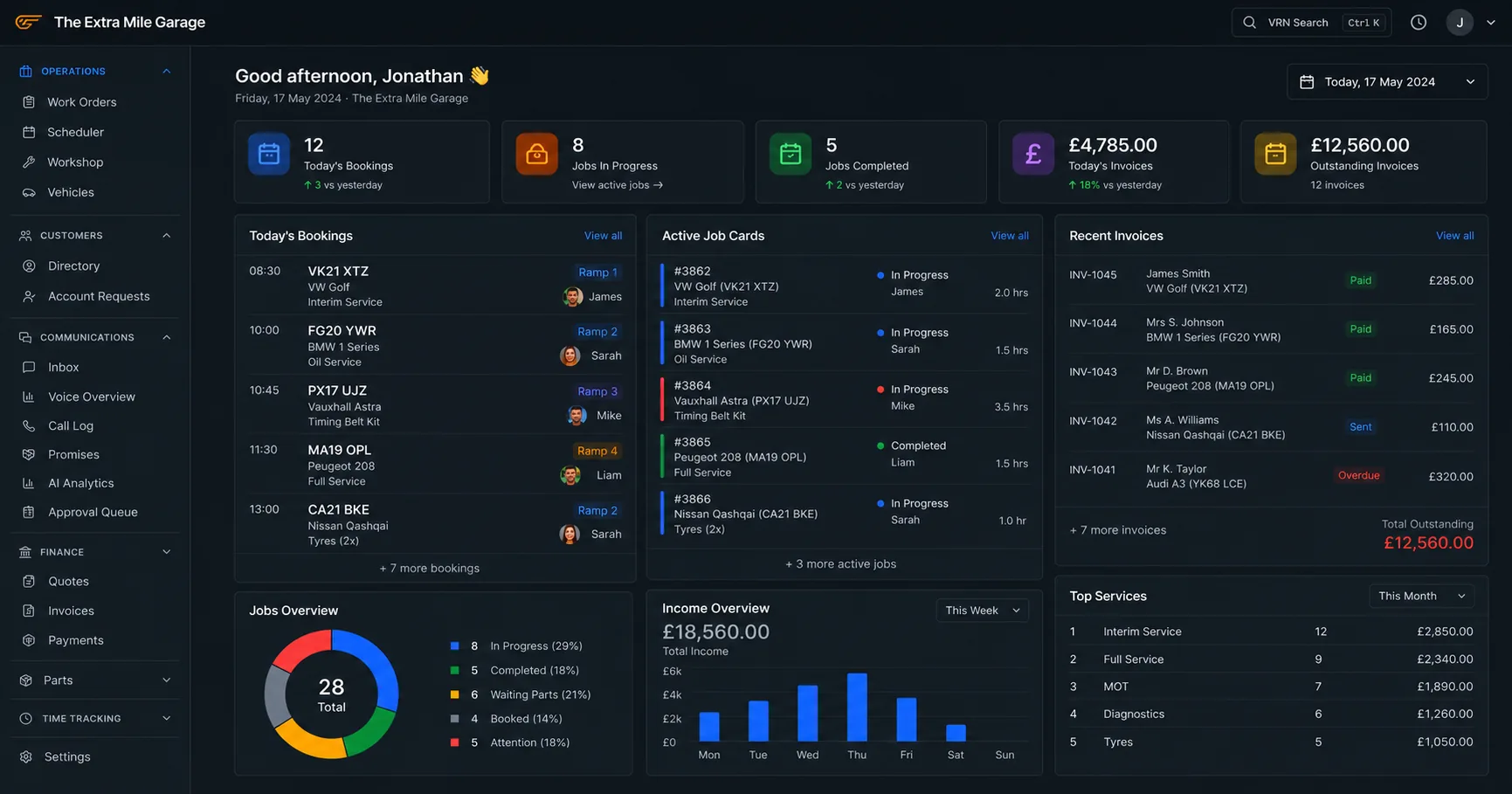
Digital garage management replaces all of that with one system. Booking, job cards, invoicing, customer communication, scheduling, reminders, payments, and reporting in one place. Not five tools. One.
What to digitise first (and what can wait)
You don’t need to go paperless overnight. The most effective approach is to digitise the things that cost you the most money first.
Start with booking and scheduling. The paper diary is the single biggest source of double-bookings, missed appointments, and idle bays. A digital scheduler with online booking eliminates all three. Customers book online. The system assigns the bay. Reminders go out automatically. This alone recovers more revenue than any other change.
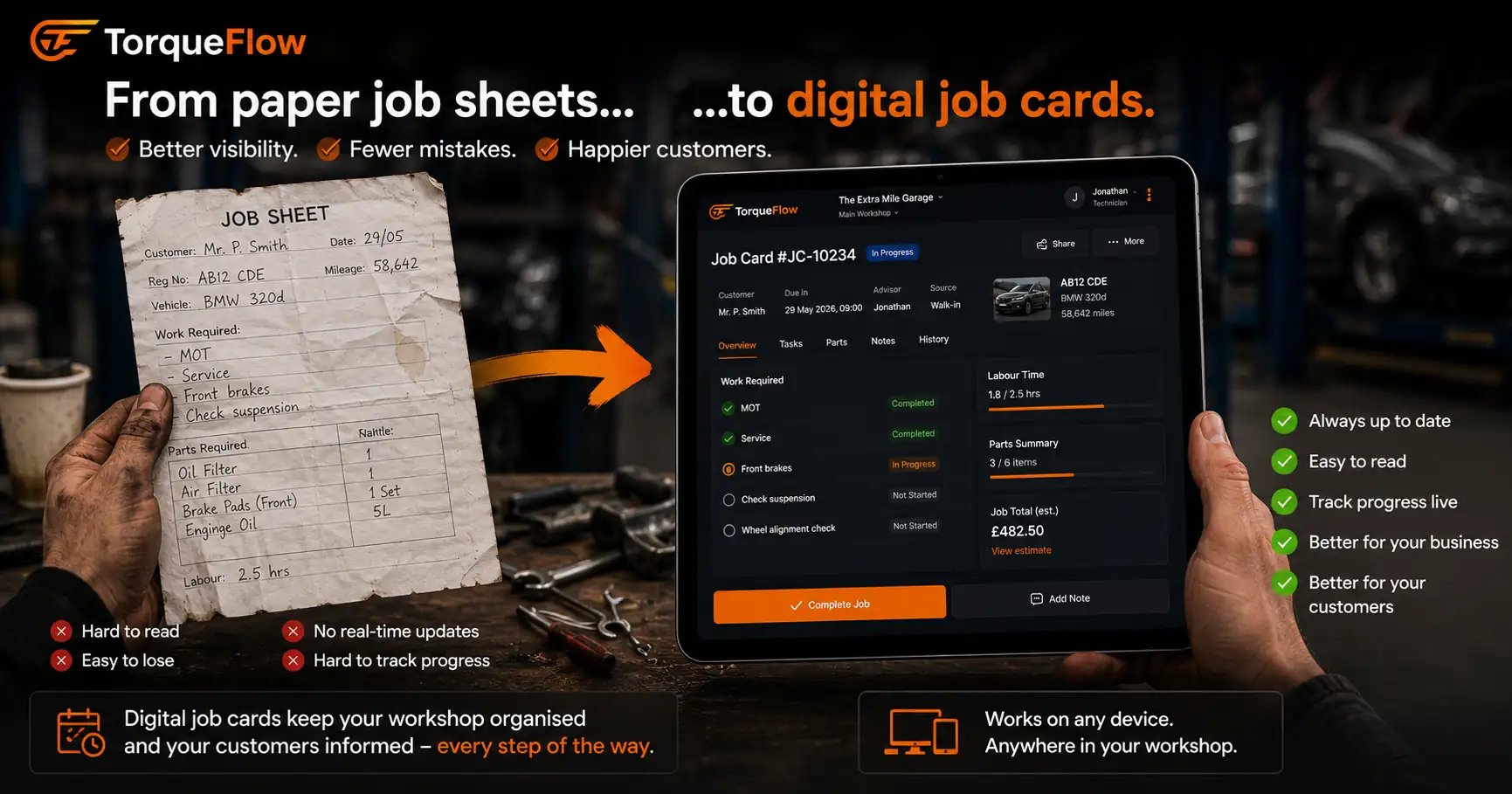
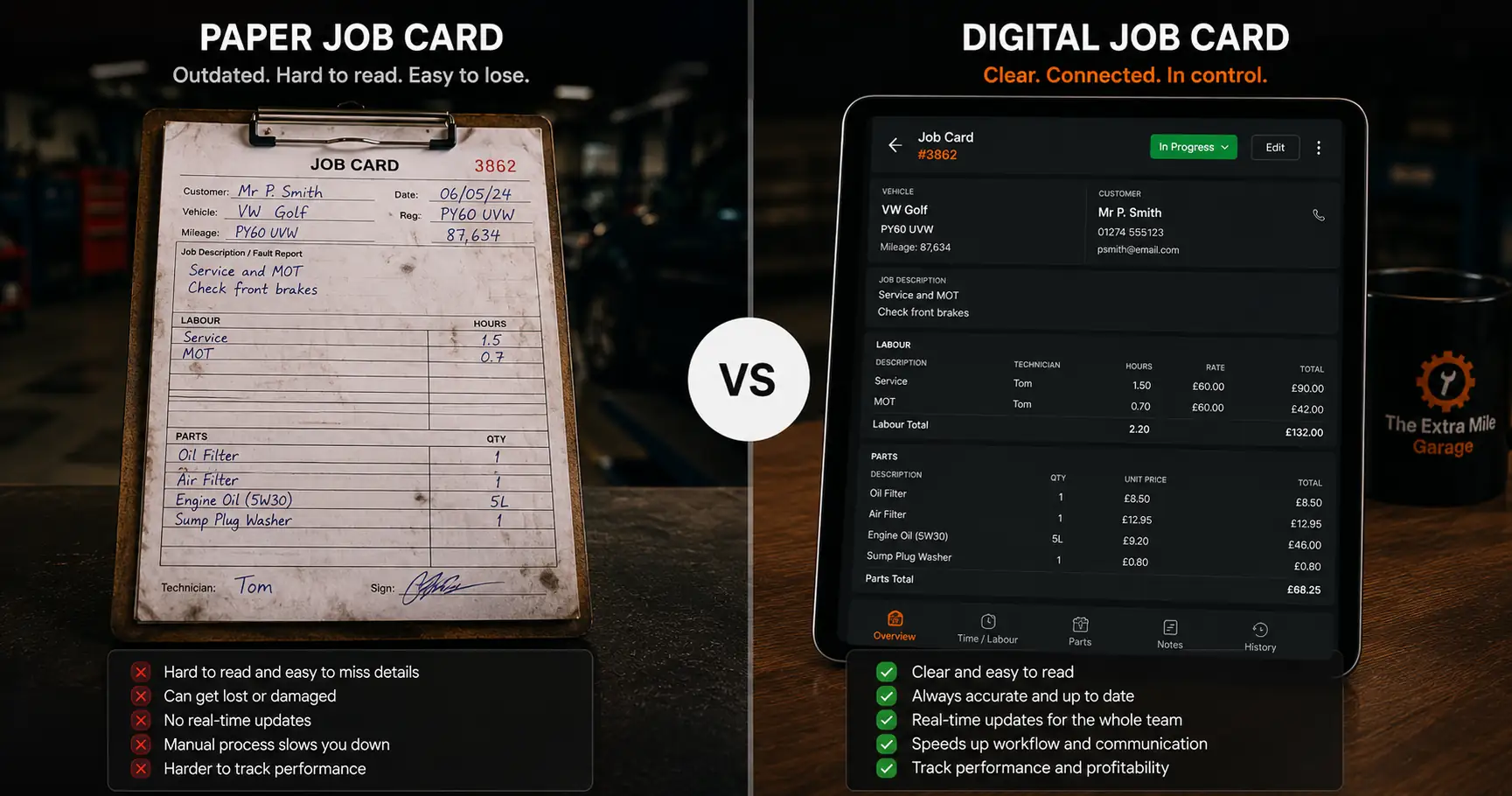
Then job cards and invoicing. Paper job cards mean unbilled parts, lost labour hours, and a Friday afternoon invoice scramble. Digital job cards link directly to the invoice. When the technician closes the job, every part used and every hour of labour is already recorded. One click to generate the invoice. One click to send it. No transcription, no data entry, no missing charges.
Read more about switching from paper to digital job cards →
Then customer communication. Move from Chloe’s personal WhatsApp to a business WhatsApp account connected to your garage management system. Every message appears in a shared inbox. Every conversation is logged against the customer record. Automated SMS and email reminders for MOTs and services go out without anyone pressing send.
Read more about WhatsApp for garages →
Then payments and accounting. Online payment links sent with invoices. A card terminal at the desk. Two-way sync with your accounting software so invoices and payments land in Xero or Sage automatically. No double entry. No reconciliation at VAT time.
Read more about getting paid faster →
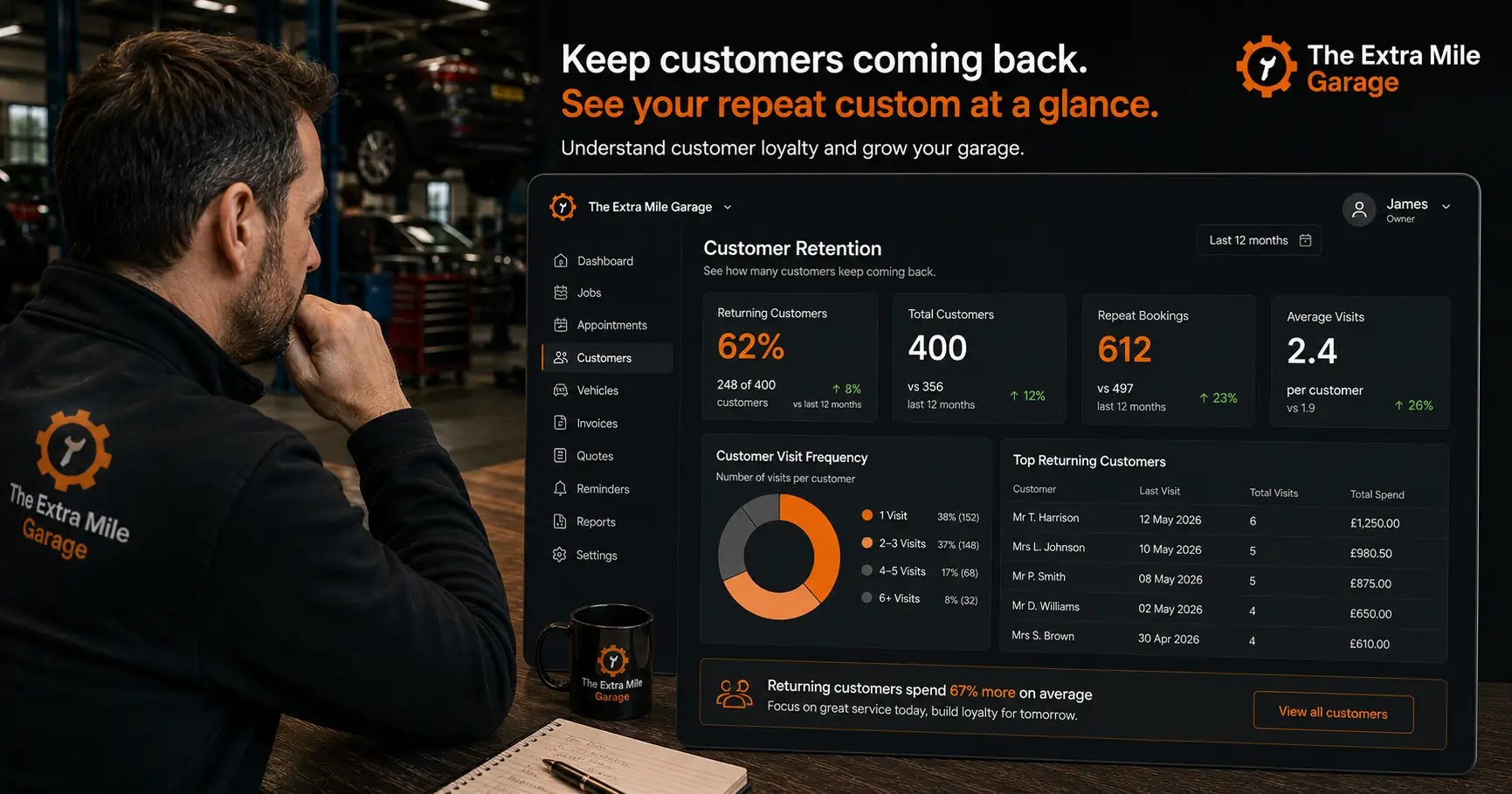
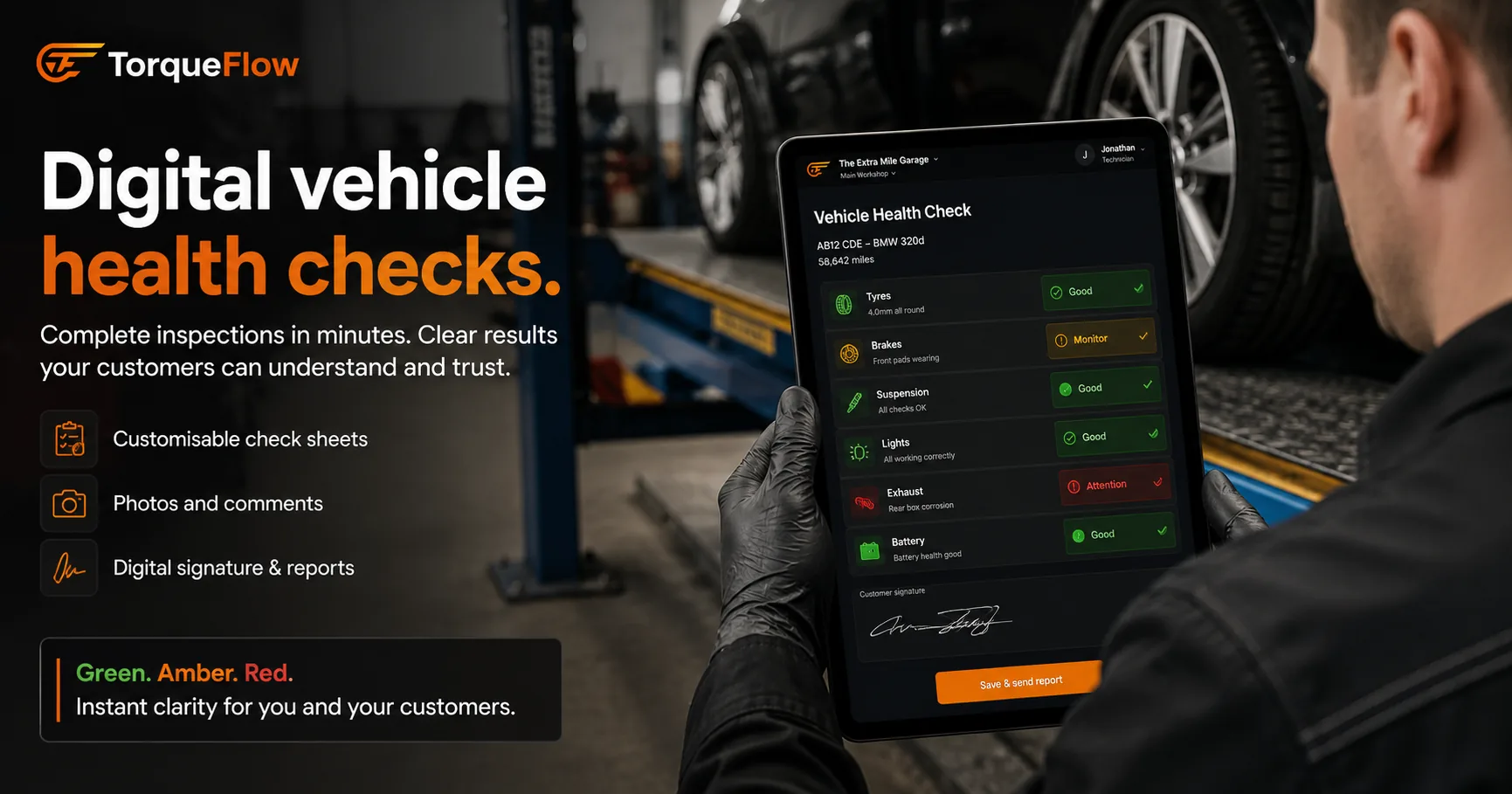
Last: vehicle health checks and customer portal. Digital vehicle health checks replace the paper inspection sheet. The customer gets a report with photos showing what passed, what’s advisory, and what needs attention. A customer portal lets them see their service history, upcoming bookings, and outstanding quotes. These are the features that differentiate your garage from the competition and drive customer retention, but they build on the foundation of the other systems.
One system vs five separate tools
The biggest mistake garages make when going digital is buying separate tools for each function. A booking system from one provider. An invoicing tool from another. A WhatsApp business account managed manually. A parts management spreadsheet. A reminder service bolted on top.
Five tools means five logins, five sets of data, five places where information gets lost between the gaps. The booking doesn’t connect to the job card. The job card doesn’t connect to the invoice. The invoice doesn’t connect to the accounting software. You’ve digitised the individual tasks but the workflow is still manual.
A garage management system handles all of these in one place. The booking creates the job card. The job card generates the invoice. The invoice syncs to your accounting software. The customer gets WhatsApp updates based on the job card status. MOT reminders go out based on the vehicle record. Everything connects because it’s one system, not five.
The cost difference matters too. Five separate tools at £30-80 each adds up to £150-400 per month, and none of them connect. A comprehensive garage management system costs more per month (£225-500 for a typical 3-5 bay garage) but replaces all five tools plus adds AI features none of them offer individually. You’re comparing a pile of disconnected subscriptions against one system that handles the full workflow.
Realistic costs for a UK garage
The “spending a fortune” fear usually comes from garages that got quoted for enterprise software, or that tried a system years ago and found it overpriced for what it did. The market has changed. But “cheap” isn’t the right frame either. The right frame is: what does this cost relative to what it saves?
Software: Most garage management systems charge per bay. For a 3-bay independent garage, expect £225-300/month depending on the provider and whether you pay annually or monthly. That covers scheduling, digital job cards, invoicing, customer communication, online booking, MOT reminders, and typically AI features like voice answering and WhatsApp automation. Annual billing usually saves 20-25%.
A 5-bay garage is typically £375-500/month. A 7-bay garage, £525-700/month. The per-bay model means you pay for what you use and add capacity as you grow.
Hardware: Most systems run on any device with a browser. A tablet for each bay (£100-200 each) and a screen in the office is the typical setup. You don’t need specialist hardware. Your existing laptop, a couple of Android tablets, and your phone are enough to start.
Card terminal: £20-30/month for a contactless card machine integrated with your management system. Pays for itself in the first week through faster payment collection.
Accounting sync: Xero integration is usually included or costs a small monthly add-on. Xero itself costs £15-40/month depending on your plan. If you’re already using Xero, there’s little or no additional cost.
Data migration: Most systems import your customer and vehicle records from a spreadsheet or export from your old system. This is usually included in setup. The technical data transfers in hours, not weeks. You don’t need to digitise every historic paper job card. Start fresh and build the digital history from day one.
Total realistic cost: £275-550/month for a fully digital 3-5 bay independent garage. That’s the cost of one missed booking per week. Compare it to the £15,000-45,000 per year in unbilled labour, missed bookings, and delayed invoices that paper systems cost you. A 3-bay garage recovering just two extra jobs a week through better scheduling and automated reminders covers the subscription before lunch on Monday.
The first week: what to expect
Day 1: Setup and import. Configure your bays, set up your booking types (MOT, service, diagnostic), import your customer list. Most garage management systems have a setup wizard that walks you through this in 2-3 hours.
Day 2-3: First jobs on the system. Your service advisor creates bookings in the digital scheduler instead of the paper diary. Technicians open digital job cards on a tablet instead of filling in a paper card. It’s slower on the first day because everything is new. By the third day, it’s faster than paper.
Day 4-5: Communication and invoicing kick in. Booking confirmations go out automatically via WhatsApp or SMS. The first invoice is generated from a completed digital job card in one click. The service advisor who used to spend Friday afternoon typing invoices finishes them in real time as each job completes.
Week 2: Nobody mentions paper. The technicians have adapted. The service advisor wonders how they ever worked without real-time bay visibility. The owner can see every job across every bay from their phone. The filing cabinet hasn’t been opened.
The “we tried software once and it was rubbish” objection usually comes from garages that tried a system 5-10 years ago when workshop software was clunky, expensive, and designed for larger operations. Modern systems are built for independent automotive workshops. They’re simpler, cheaper, and designed around how a 3-6 bay UK garage actually works.
Frequently asked questions
Five tools or one. Five logins or one. Five monthly bills or one.
Going digital doesn’t mean buying a tool for every task and hoping they work together. It means one garage management system that handles booking, job cards, invoicing, customer communication, scheduling, reminders, and payments in a single connected workflow. The cost is less than the paper and tools you’re replacing. The transition takes a week. And the garage that runs on one system instead of five separate workarounds runs a successful garage.
Torqueflow is the all-in-one system for UK independent garages. Scheduling, job cards, invoicing, WhatsApp, customer portal, and accounting sync. One login. One bill.