Why Garage Owners Are Dropping Desktop Systems for Cloud Garage Software
Garage owners are leaving desktop systems for cloud garage software for three blunt reasons: the diary is trapped on one PC, the backup depends on someone remembering, and the licence dies with the machine. The move costs a subscription where there used to be a one-off purchase, and it’s still happening across UK workshops in 2026, because the trade-off stopped being close. Here’s the honest version of why, including what the old systems got right.
What the desktop generation got right
Let’s start with some respect, because the office-PC era of garage software earned it.
You bought it once. It ran fast on modest hardware. It never cared whether the broadband was up. Systems like SWS GA4 sold as a one-time desktop purchase, and for a certain kind of owner that deal was honest: pay once, invoice jobs for a decade, owe nobody a monthly fee. Plenty of UK garages ran their whole operation that way through the 2000s and 2010s, and the businesses thrived.
If that’s your setup today, nobody should mock it. It worked. The question is whether it still does, and the cracks tend to show in the same three places.
Where the office PC becomes the business risk
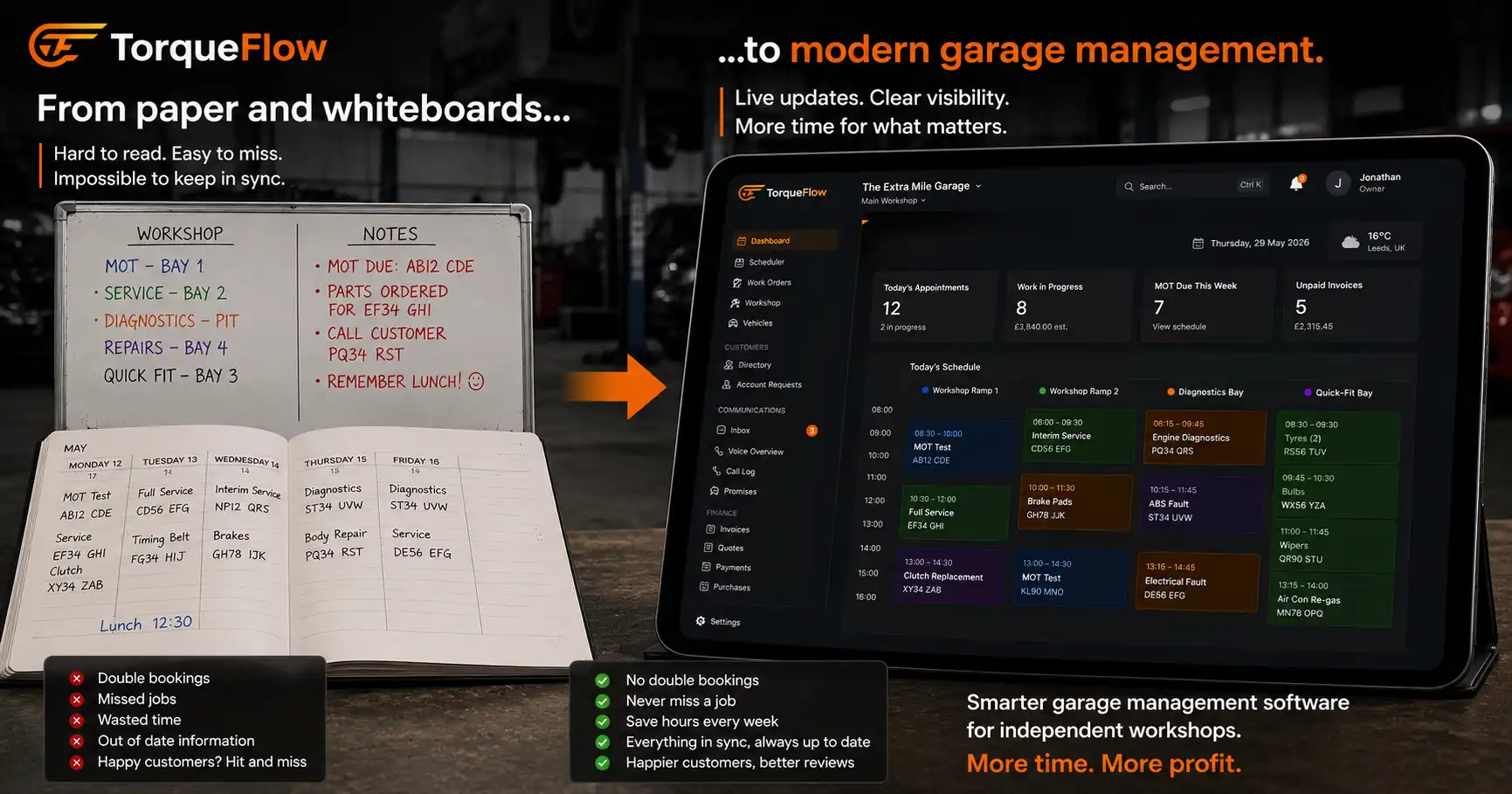
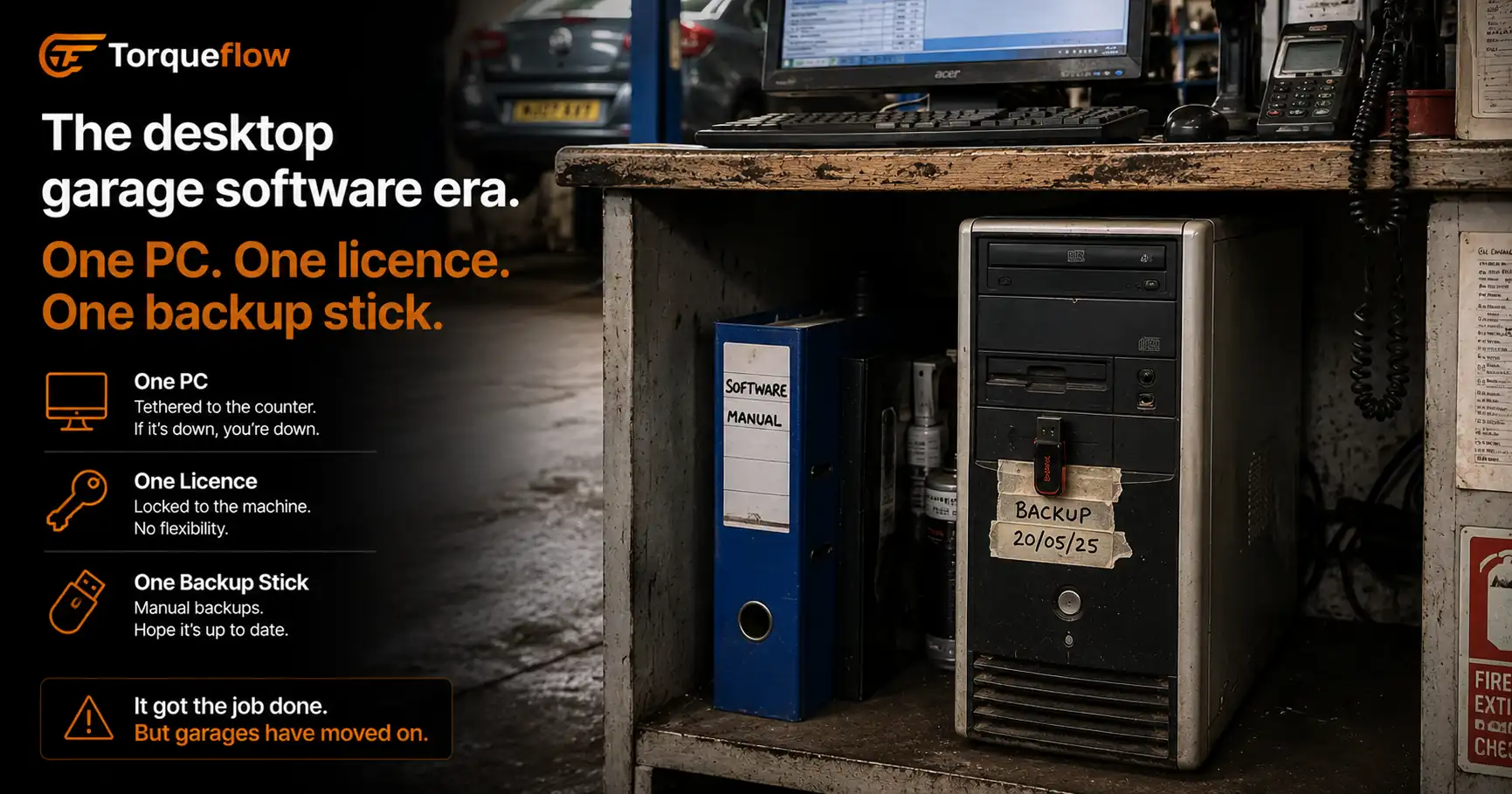
The diary lives in one room. The bookings, the customer history, the unpaid invoices: all of it visible only from the machine it’s installed on. Want to check tomorrow’s first job from home? Drive in. Want to quote a customer while you’re under a car? Walk to the office. A business’s entire memory, accessible from one chair.
The backup is a ritual, not a system. Somewhere near that PC is a USB stick or an external drive, and a backup that happens when someone remembers. Ask yourself, honestly, when yours last ran. Hard drives fail without ceremony, and a workshop that loses the customer base, the service history, and the money it’s owed in one hardware death doesn’t always recover. The garages this happens to aren’t careless; they’re busy.
The software stops moving. Desktop licences are tied to a machine and a vendor’s willingness to maintain them. The one-man software author retires. The product gets bought and sunsetted. Windows updates break something nobody will fix. Meanwhile the world outside keeps moving: DVLA lookups change, MOT rules change, customers expect online booking, and the old system can’t learn any of it.
None of these are hypothetical. They’re the three stories every cloud vendor hears from new customers, told in the past tense, usually starting with “we’d been meaning to switch for years.” Traditional systems concentrate all three risks in one box under one counter.
What cloud garage software actually changes
The pitch for cloud based garage software gets dressed up in jargon, but the substance is four things.
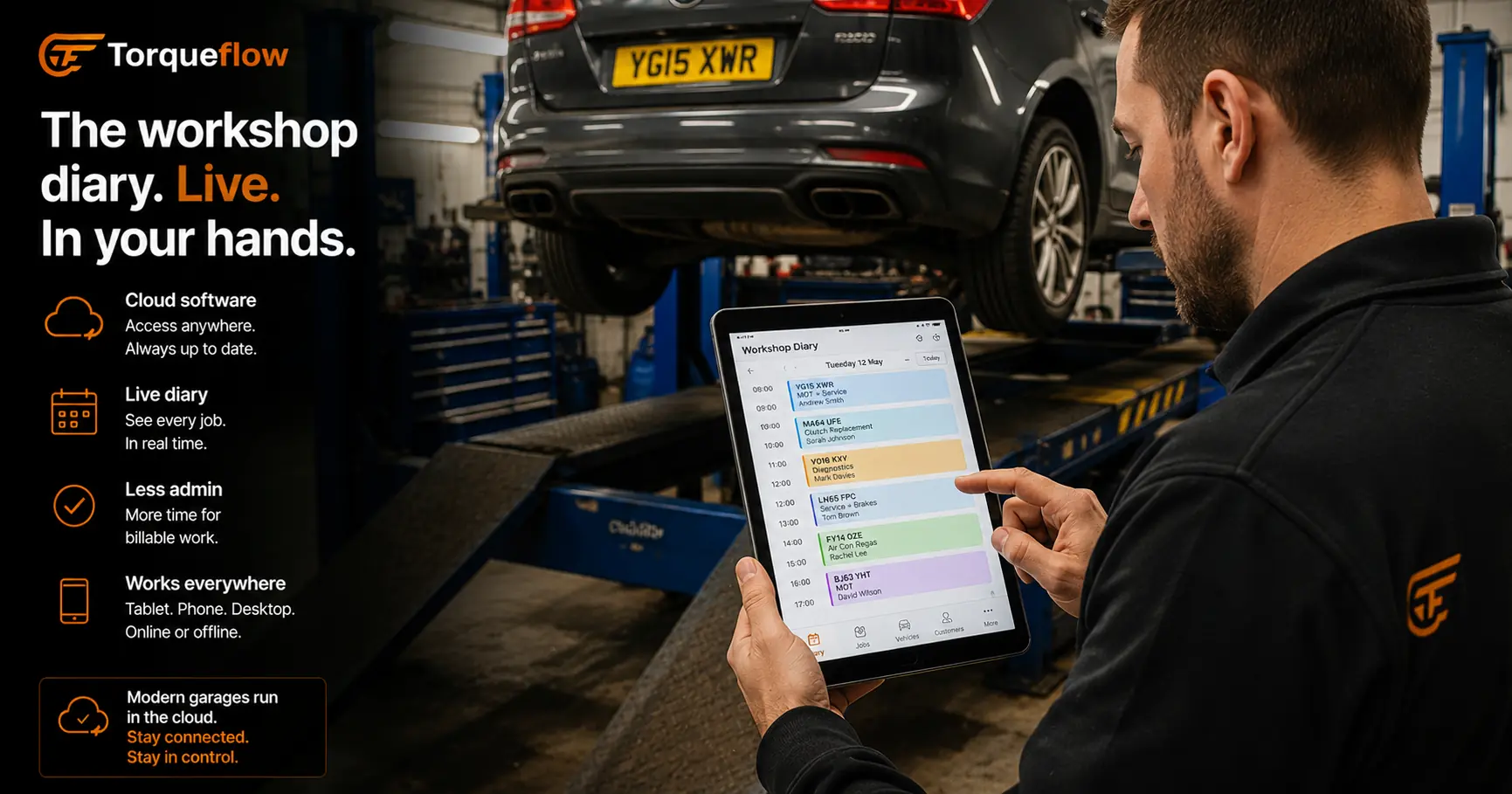
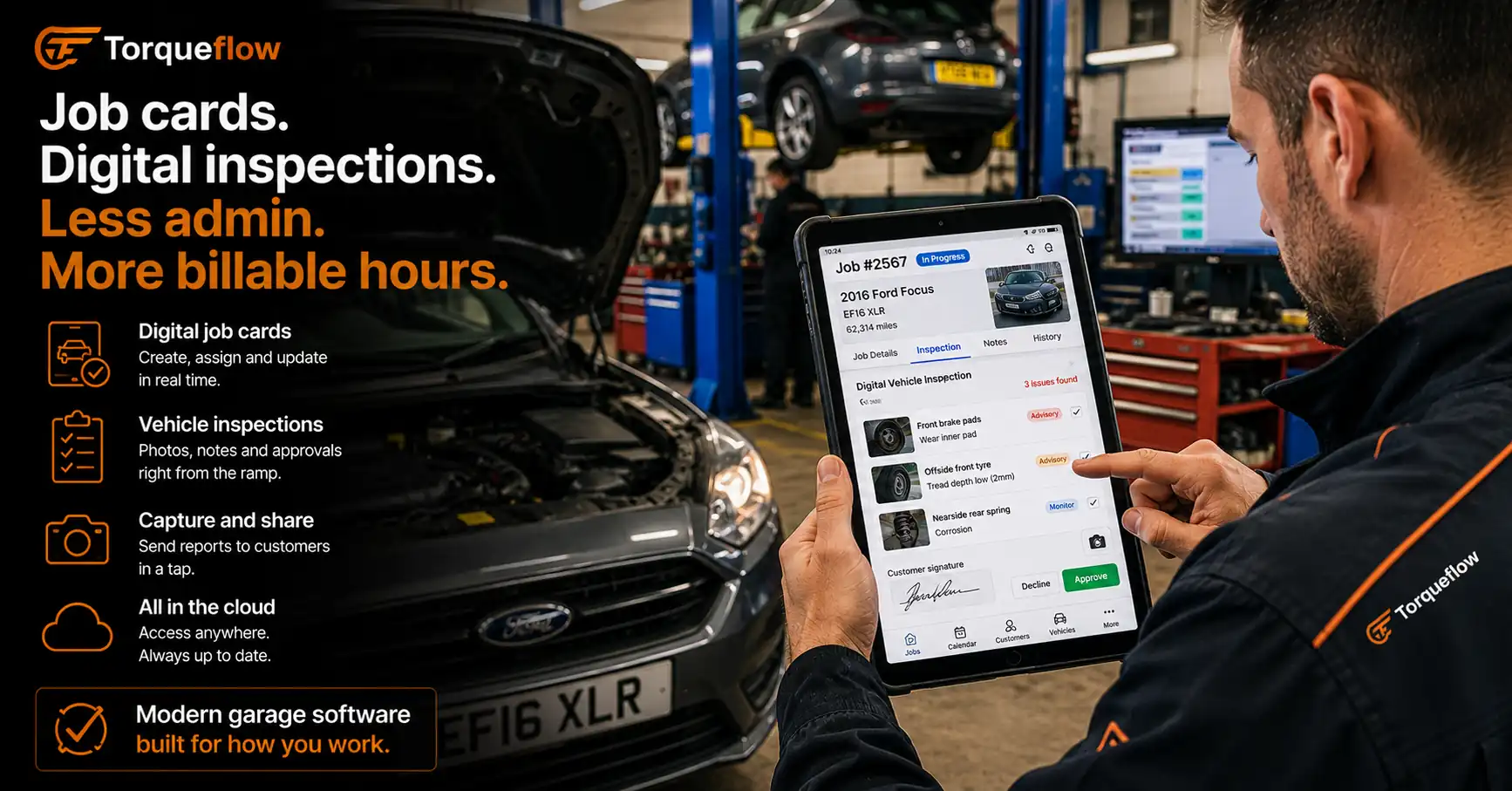
The business stops living in one machine. Cloud garage software allows workshops to access the diary, job cards with labour times, and customer records from anywhere: the office, the ramp, the van, the kitchen at 9pm. Service advisors, technicians, and the owner see the same live system on a phone, a tablet, and the front-desk screen. For mobile mechanics and multi-location operations this isn’t a perk; it’s the whole argument.
The backup problem disappears. Your data lives in professionally run infrastructure with automatic, continuous backups. The PC under the counter can die at lunchtime and the afternoon’s bookings won’t notice. (Ask any vendor where your data is stored and how you’d export it; good answers exist and you deserve them.)
The system keeps learning. Updates arrive without CDs or call-out fees. When DVLA integration changes or MOT rules shift, the software helps you keep up without anyone touching a server. And the things worth connecting only integrate in the cloud: two-way accounting software sync with Xero or Sage, parts catalogues and HaynesPro technical data, online booking and MOT booking that write into the live diary, automated reminders for MOT reminders and servicing that send themselves. That integration layer is now the customer experience: the booking, the reminder, the reply.
The newest layer is only possible there. The AI-powered features changing front desks, phone answering, invoice scanning, workflow automation, all run on cloud infrastructure. No desktop install will ever answer your phone at 8:40am.
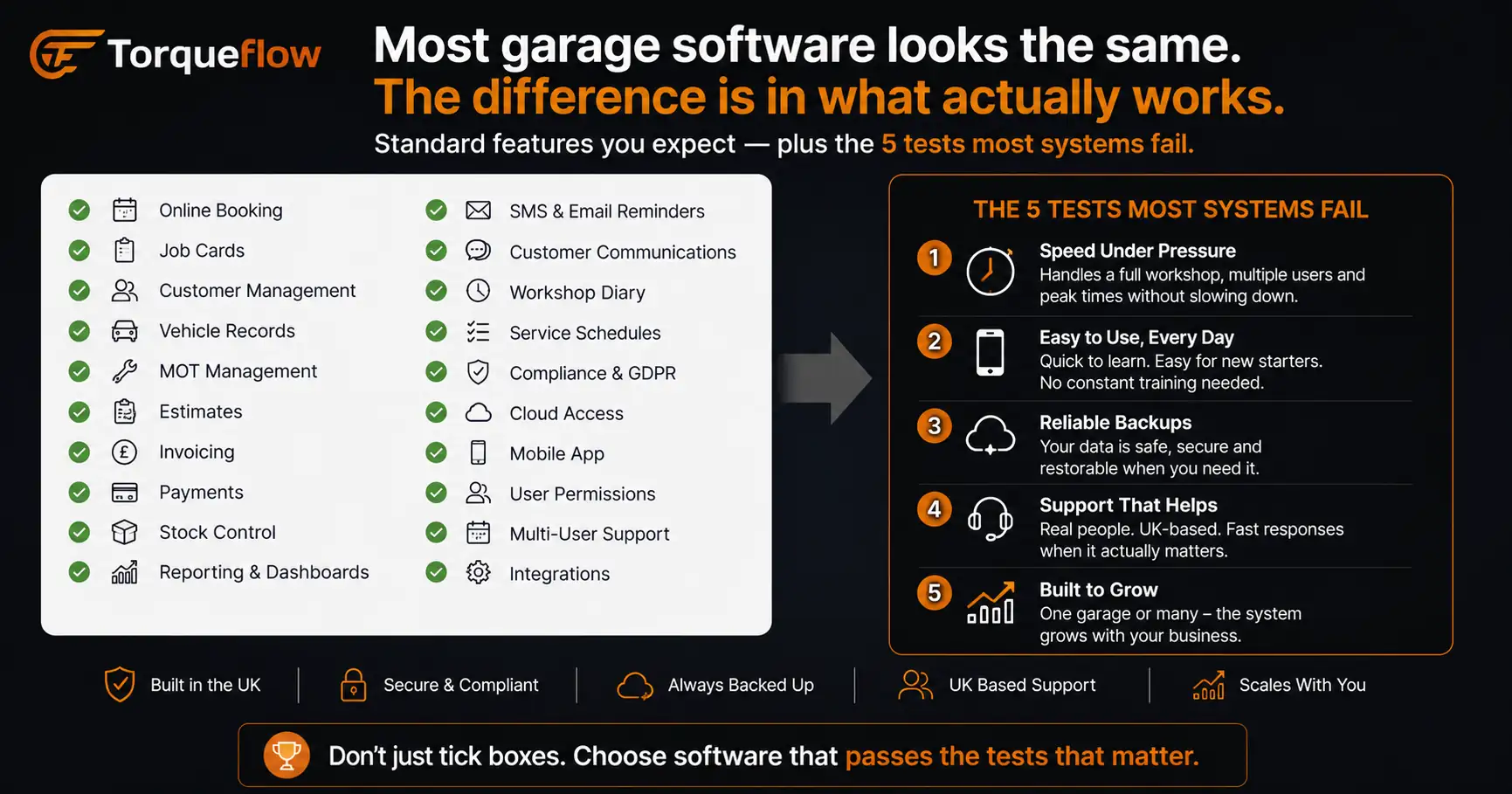
Underneath all four is one shift: workshop software stopped being a filing cabinet and became a connected system for the whole of your garage operations. Job tracking, technician coordination, customer communication, billing, and the financial data all in one place, with workflow visibility from any device. Customer management lives in what amounts to a garage CRM: every customer, vehicle, and conversation on one record. Workshop management gains the reporting tools and business intelligence the old products never had, the kind that turn financial data into business growth decisions. In modern workshops, garage software helps workshops manage the whole day from one screen rather than three ring binders and a desktop database. That’s workflow management, not filing.
The honest costs of moving
This is the part vendor pages skip, so we won’t. The desktop vs cloud decision has real entries on both sides of the ledger.
The subscription is real money. A paid-off desktop licence costs nothing this month; cloud garage management software costs something every month, forever. The comparison that matters is subscription cost against what the old setup quietly costs: the admin hours, the missed bookings, the invoices that never went out, the risk sitting on one hard drive. For most garages that maths favours the move easily, but it’s your maths to do, not ours to assert.
You depend on the internet. A connection outage means working from your phone’s mobile data until it’s back. In most of the UK that’s a manageable risk; if your unit has genuinely unreliable connectivity, weigh this seriously and ask vendors what works offline.
Migration is a project. Your customer history, vehicles, and invoices have to come out of the old system and into the new one. This is the fear that keeps garages on dying desktop systems for years, and it’s more solvable than it feels: most old systems export to CSV or Excel, and a modern import reads those files, previews everything, and lets you roll back. We’ve written the practical version in the guide to digitising your garage →, and the vendor-specific switching guides cover what transfers in detail.
There’s a learning curve. A week of “where’s that button?” while muscle memory rebuilds. Plan the move for a quieter month, not MOT season. The good systems reduce operational complexity within a fortnight; the bad ones just relocate it.
Choosing where to land
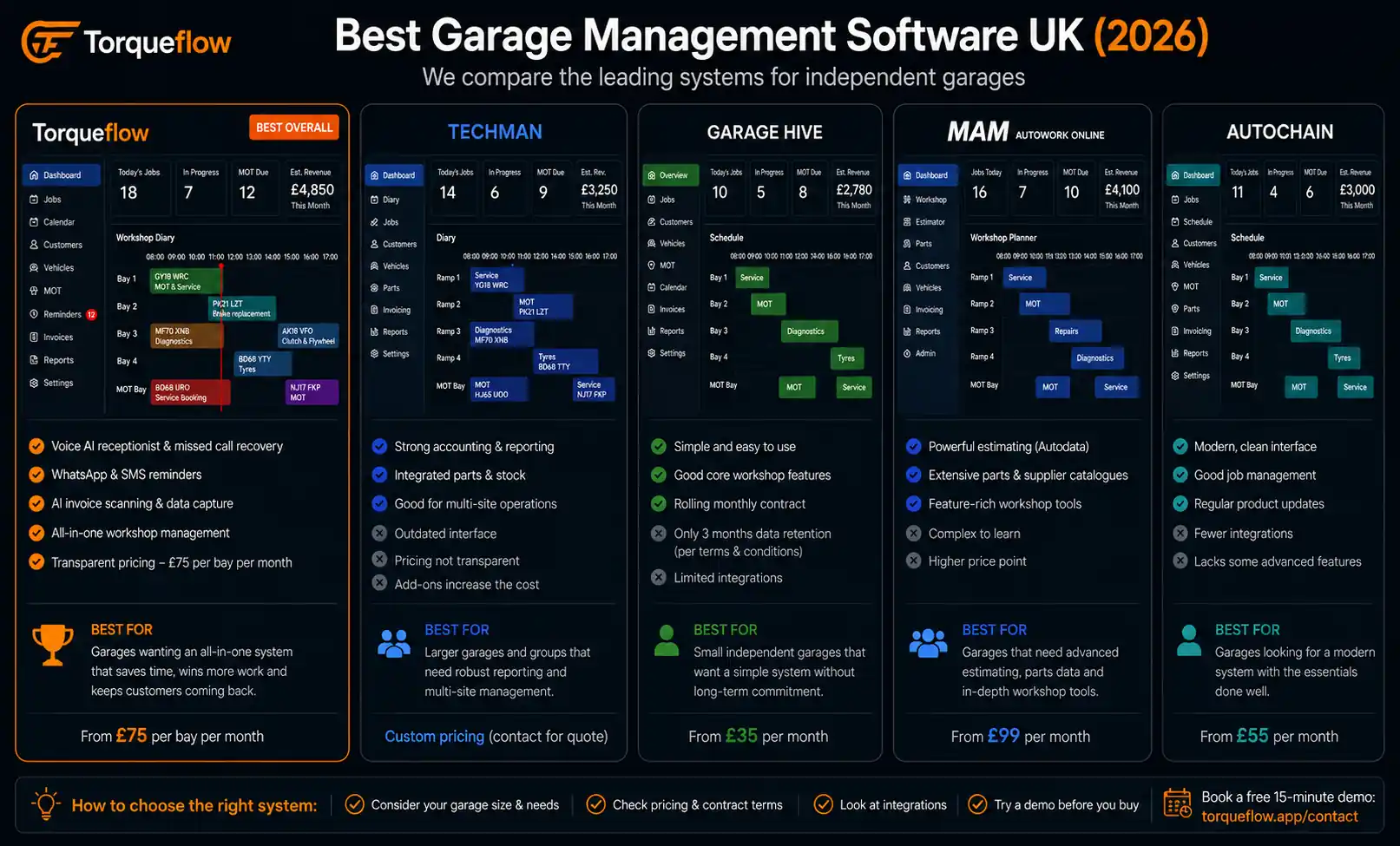
If the move is on, the field is wide: the established cloud systems like Techman and Garage Hive (the latter built on Microsoft’s ERP platform), the newer entrants, and everything between. How to choose the best garage software for your workshop operations depends on garage size, growth plans, and which daily operations hurt most, and we’ve written the five tests to run on any vendor → precisely so you don’t have to take any single best garage management software claim on faith, ours included.
Two pieces of guidance that hold regardless of vendor:
- Compare all-in monthly costs, not headline prices: per-user fees, add-on modules, and metered extras change the real number. The UK garage software comparison → has the verified figures side by side.
- Ask every vendor the exit question: “how do I get my data out if I leave?” A cloud system without clean export is the office PC problem wearing a subscription. The good vendors answer in one sentence.
For the wider picture of what garage management systems now cover, the complete garage software guide → is the pillar.
The trade already decided
The desktop era isn’t ending because cloud marketing won. It’s ending because the modern automotive service and repair trade moved its customers to online booking and instant replies, because the surviving desktop vendors became cloud vendors themselves, and because independent garages concluded that a business’s memory shouldn’t live in one machine in one room. Search any garage management software UK roundup and count the desktop products left. The era ended quietly, while customer expectations kept rising.
The owners still running a 2012 install aren’t wrong to have stayed; that system kept its promise. But the promise has an expiry date, and most owners know roughly when theirs is: the day the PC doesn’t turn on.
Move before that day. Export your customer list this week, just to prove you can, and when you want to see what your data looks like in a system that lives everywhere, we’ll import it into a demo.
Torqueflow is cloud-based garage management for UK workshops: your diary, job cards, invoices, and an AI receptionist, on every device you own.