What Your Garage Customers Actually Expect in 2026
Your customers’ expectations have changed faster than most garages have. The person booking an MOT in 2026 orders groceries from their phone, tracks their Deliveroo driver in real time, and pays for everything with a tap. Then they call your garage and get voicemail. Here’s what they actually expect and where most independents are falling short.

Five years ago, a garage customer expected a phone call, a paper invoice, and a “should be ready by Friday.” That was fine. Everyone operated that way.
In 2026, that same customer books a table on OpenTable, checks their parcel location on the Royal Mail app, and gets a WhatsApp from their dentist confirming Tuesday’s appointment. They live in a world where every service they use is digital, instant, and transparent. Then they interact with their garage and it feels like stepping back a decade.
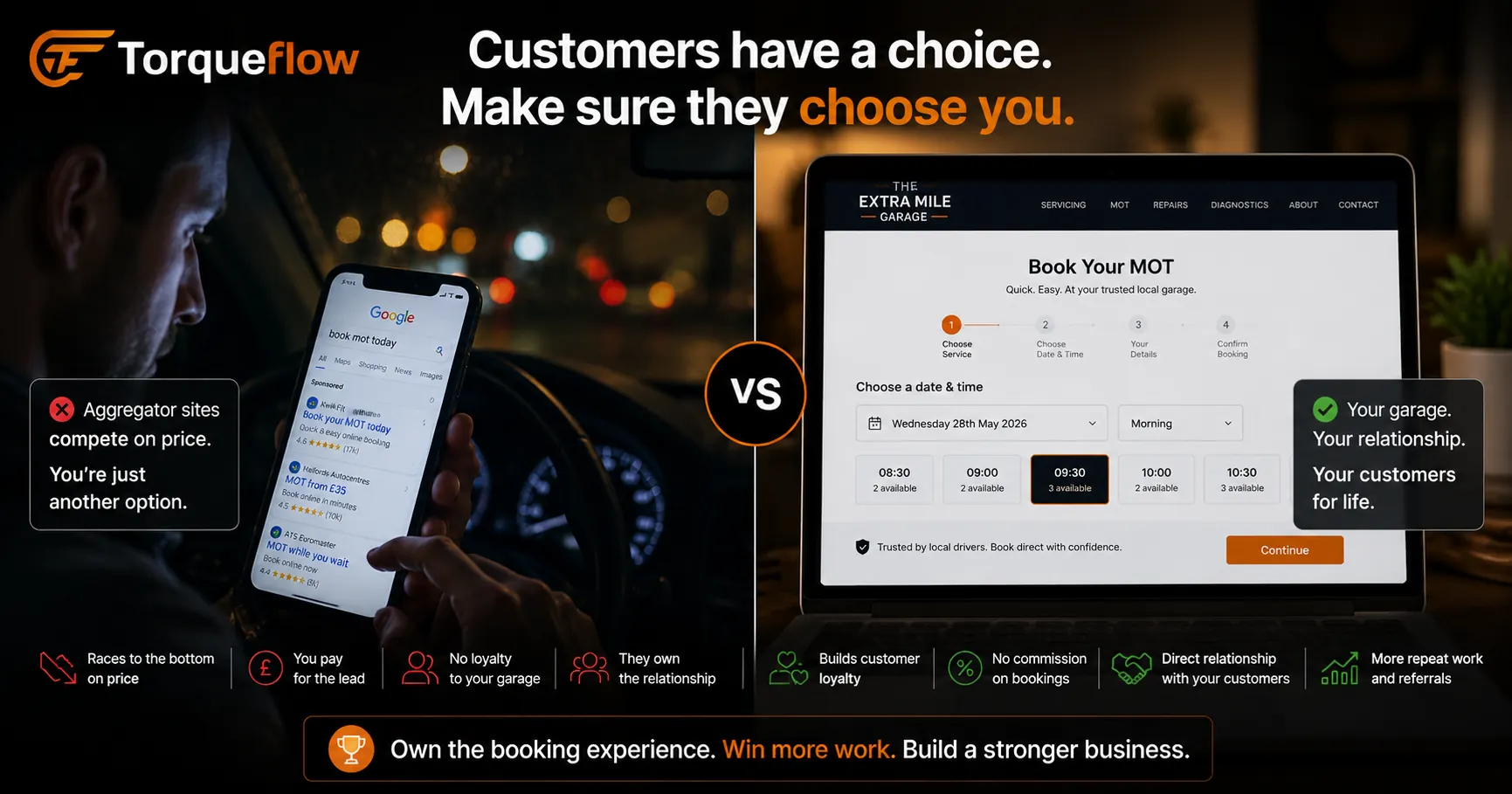
The gap isn’t about quality of work. Most independent garages do better repairs than the dealer at a lower price. The gap is the customer experience around the work. And it’s this gap that sends customers to BookMyGarage instead of calling you directly.
They expect to book online, not by phone
The shift happened gradually and then all at once. Your customer books flights, restaurants, haircuts, and GP appointments online. They expect to do the same with their garage.
Online booking doesn’t mean a contact form that someone replies to on Monday. It means real-time availability. The customer opens your website at 9pm on a Wednesday, sees that Thursday at 2pm is free, taps it, and gets an instant confirmation. Done. No phone call. No waiting for opening hours.
The school-run mum booking her MOT from the sofa at 9:30pm isn’t going to ring you at 8am tomorrow. She’ll search “MOT near me”, find a garage with online booking, and book in under a minute. If your garage doesn’t offer that, you’ve lost her before she even knew you existed.
The tradesperson who needs the van back by 3pm doesn’t want to play phone tag. They want to see your available slots and pick one that works. Booking systems that show real-time availability and send instant confirmation are the baseline now, not a luxury.
Read more about garage booking systems →
They expect updates during the job
“We’ll call you when it’s ready” used to be acceptable. It’s not any more. Your customer tracks their Amazon delivery to the minute. They watch their pizza being made on the Domino’s app. Then they drop their car at your garage and hear nothing for six hours.
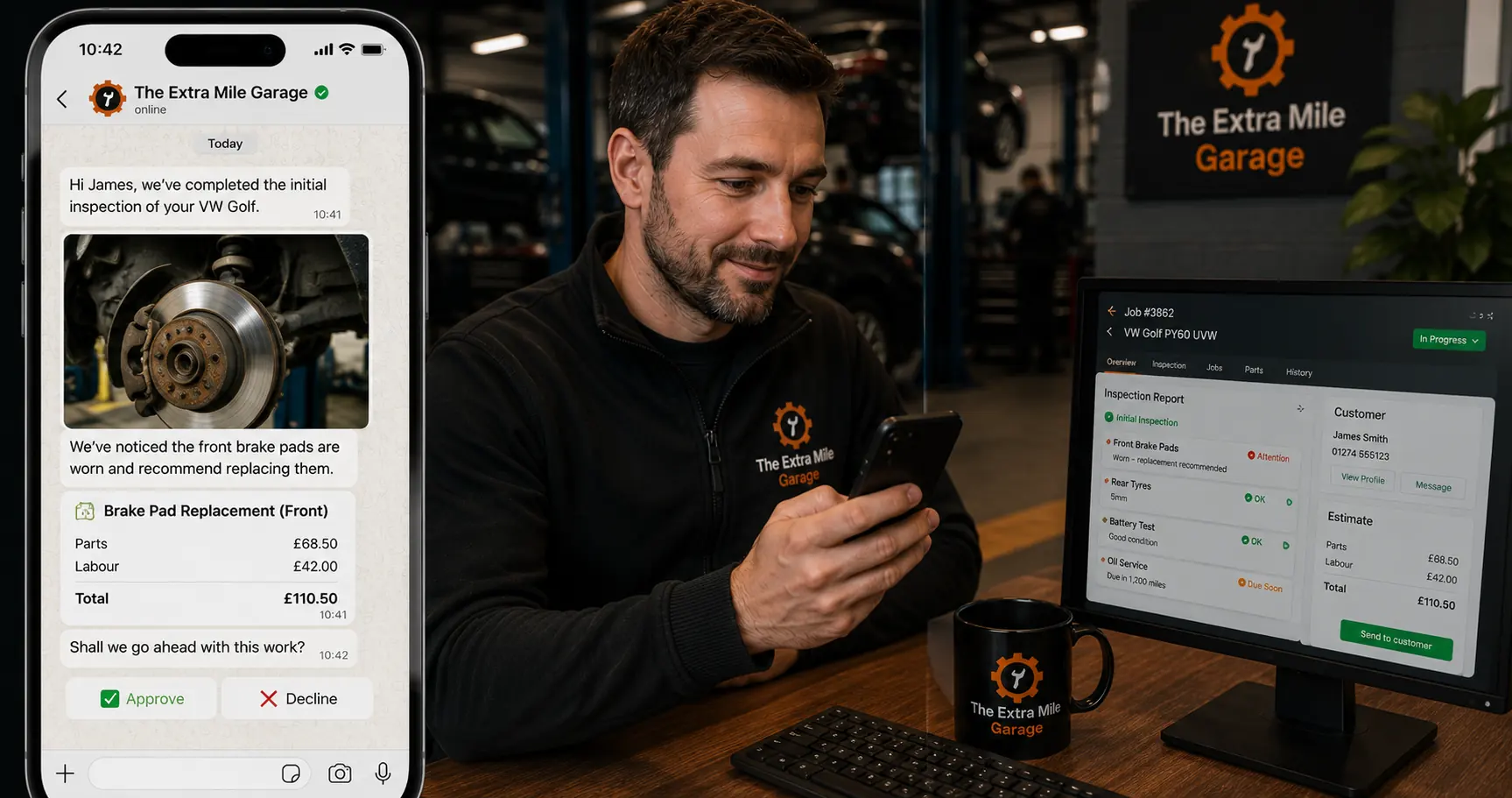
The expectation in 2026 is proactive communication. A message when the car goes on the ramp. A photo of the worn brake pads with a quote for replacement. A notification when additional work is needed, with approval by reply. A final message when the car is ready for collection.
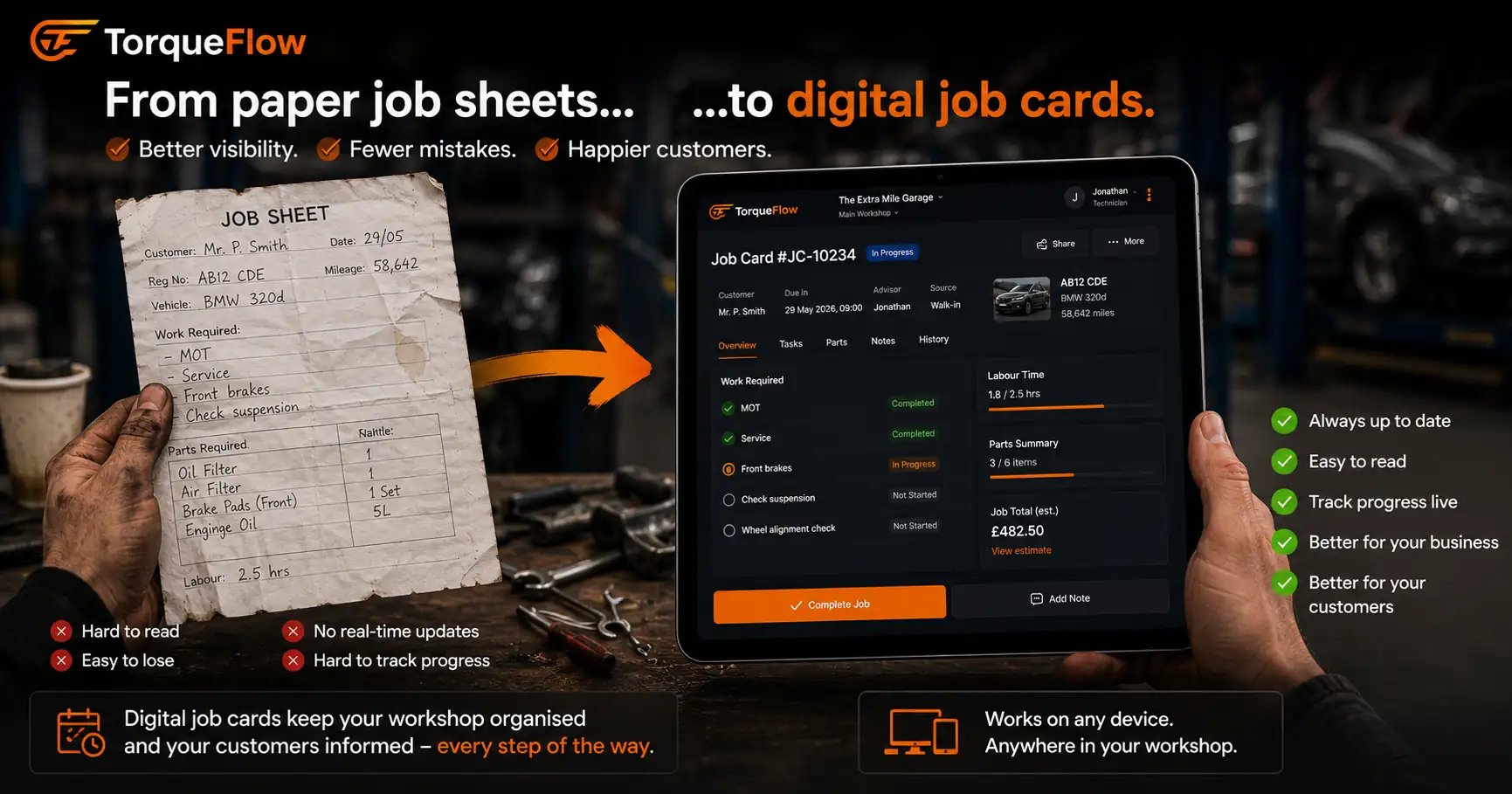
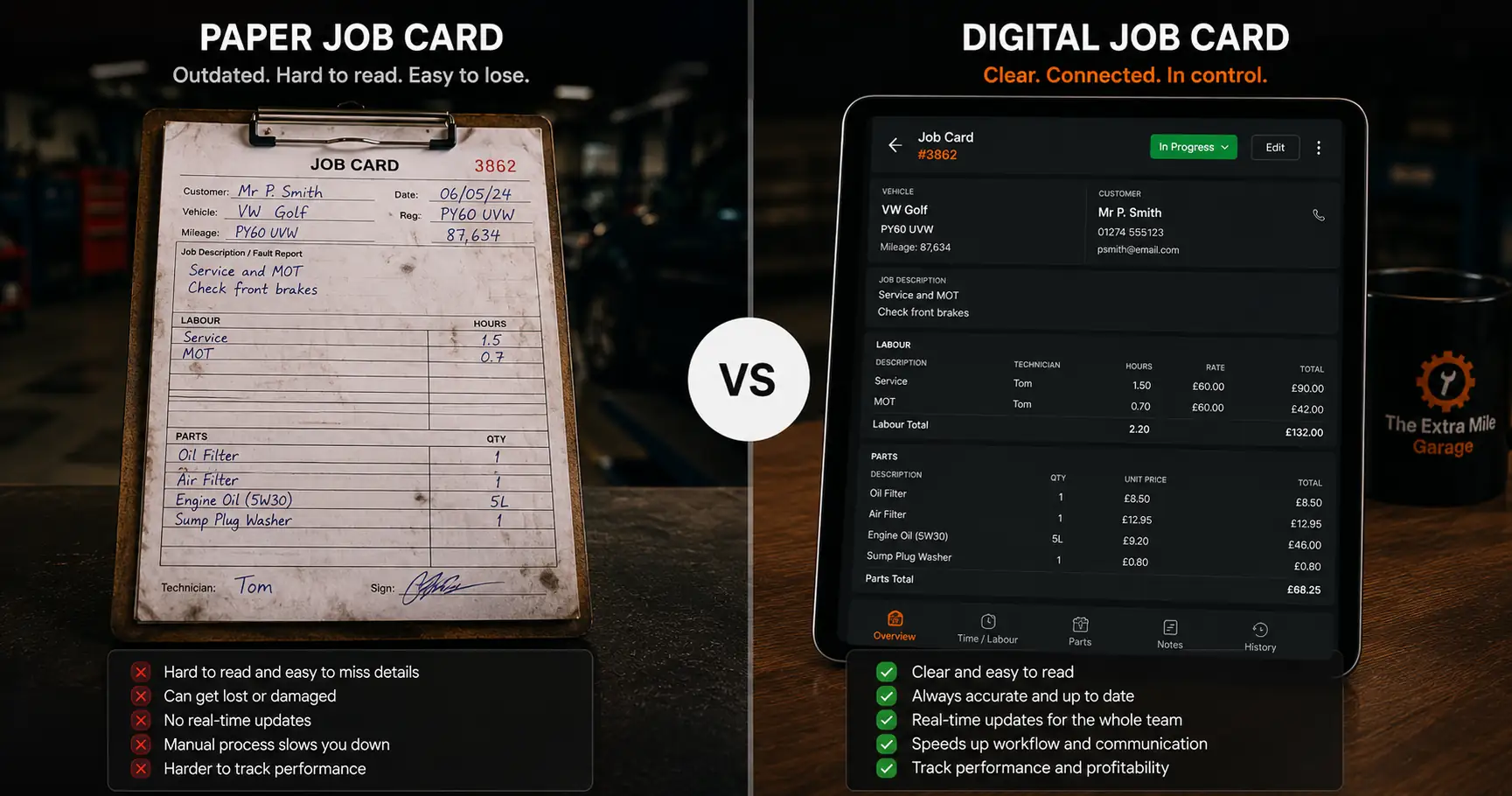
This doesn’t require a receptionist glued to WhatsApp. A garage management system that sends status updates automatically based on the job card stage handles it. When the technician moves the job to “on ramp”, the customer gets a message. When the advisor adds a line to the quote, the customer gets a notification to approve or decline. When the job moves to “complete”, collection details go out.
Customers who receive updates during the job are measurably happier. They feel informed. They feel valued. They trust the garage enough to approve additional work because they can see the evidence. Neglect that communication and you get the anxious 2pm phone call asking “is my car done yet?” that interrupts your workshop flow.
They expect to pay without friction
A paper invoice and a bank transfer is how garages have collected payment for decades. It works, but it’s slow and it’s friction.
Your customer taps their watch to pay for coffee. They split a restaurant bill through their banking app. Then you hand them an invoice and ask them to manually type in a sort code. The experience mismatch is jarring.
In 2026, customers expect a payment link. The invoice arrives on their phone via WhatsApp or SMS. They tap “Pay now”, enter their card, and it’s done in 30 seconds. Or they tap their card on a terminal at your desk. Either way, the payment happens in the time it takes to hand them the keys.
The garages that have moved to digital payment report faster collection (1-3 days vs 14-21 days by bank transfer) and happier customers. It’s one less task for the customer and one less invoice for you to chase.
Read more about getting paid faster →
They expect to see their vehicle’s history
Dealers have had customer portals for years. MyBMW, MyAudi, Mercedes me. The customer logs in and sees every service, every MOT, every advisory item, every invoice. It’s all there. When they need to sell the car or check when the timing belt was last done, they don’t need to ring anyone.
Independent garages that offer the same thing immediately close the gap. A customer portal where motorists can see their vehicle health check reports, service history, outstanding quotes, and upcoming bookings gives them a reason to stick with you. It builds trust because everything is visible. No surprises, no hidden charges, no “I think we did the brakes last time but I’d have to check.”
This also matters for the 3-year warranty cliff. When a car comes off its manufacturer warranty after three years, the customer decides whether to stay with the dealer for maintenance or find an independent. The dealer’s advantage at that point isn’t the quality of the service. It’s the digital experience around it. Match that experience and you win those customers on price alone.
They expect you to remember them
A customer who’s been coming to your garage for five years shouldn’t have to explain their car or their preferences every time. They expect you to know their vehicle, their history, and their usual requirements.
“Same car as last time?” should be the opening line, not “what’s the registration?” A garage management system stores every interaction: the vehicle, the customer’s contact details, previous repairs, outstanding advisories, preferred contact method, even their regular booking pattern.
When a customer feels known, they’re loyal. When they feel like a stranger every time they call, they’ll try somewhere else. Personalised service isn’t sending a birthday card. It’s remembering that Mrs. Chen always wants a courtesy call before you do any extra work, and that Dave from the plumbing firm needs his Transit back before 3pm every time.
This is what separates the independent garage experience from the aggregator experience. BookMyGarage sends every customer to the cheapest option. Your garage knows who they are. That’s your competitive edge. But only if your systems support it.
They expect honest, transparent pricing
The automotive repair industry has a trust problem and every garage owner knows it. Customers regularly expect to be overcharged or sold work they don’t need. The garages that thrive in 2026 are the ones that confront this head-on with transparency.
That means itemised quotes (not “it’ll be about £400”). It means photos of the worn parts before replacing them. It means a vehicle health check report that shows green, amber, and red items so the customer can see exactly what needs doing now and what can wait. It means no surprise charges at collection.
A standard of service that prioritises transparency builds customer satisfaction faster than any promotional offer. One bad experience with an unexpected bill undoes years of good work. One transparent quote with photographic evidence creates a customer who tells their friends.
Google reviews reflect this directly. The garages with 4.8-star ratings aren’t necessarily doing higher quality repairs than the 3.5-star garages. They’re communicating better. They’re providing the evidence. They’re making the customer feel like a partner in the decision, not a victim of it.
The gap is closing, but slowly
Most independent garages still operate with phone booking, paper invoices, and no aftercare communication. The customer experience gap between independents and dealers is real and it’s measurable: online booking availability, digital communication, service portals, automated MOT reminders.
But here’s the thing: the tools to close that gap already exist. Garage management software in 2026 offers online booking, WhatsApp messaging, customer portals, digital vehicle health checks, automated reminders, and instant payment links. The garages that have implemented these tools are growing. The ones that haven’t are slowly losing customers to the ones that have.
The customer expectation isn’t going to evolve backwards. Every year, the bar rises. The garage that meets it builds loyalty, earns repeat business, and grows through referrals. The one that doesn’t will keep wondering why the diary is getting harder to fill.
Frequently asked questions
Your customers have already moved on. Has your garage?
The standard of service your customers expect in 2026 is set by every other business they interact with, not by other garages. Online booking, real-time updates, digital payments, transparent pricing, and a record of every visit. These aren’t premium features. They’re the baseline. The garages that deliver this experience keep their customers. The ones that don’t keep wondering where they went.
Torqueflow gives your customers the experience they expect: online booking, WhatsApp updates, a branded portal, and transparent digital vehicle health checks.