What BookMyGarage and the Dealers Taught Us About Garage Customer Loyalty
Garage customer loyalty is eroding, and the search data proves it. BookMyGarage gets around 18,100 brand searches a month in the UK. “Book MOT today” is up 51% year on year; “book MOT for tomorrow” is up 179% (Google Keyword Planner, May 2026). A driver with a regular garage doesn’t type those searches. They ring their garage. Every one of those searches is a customer relationship that lapsed, quietly, without an argument or a complaint. The aggregators and the dealer networks understood something about retention before the garage industry did. This is what they understood, and how an independent takes it back.
Customers leave quietly now
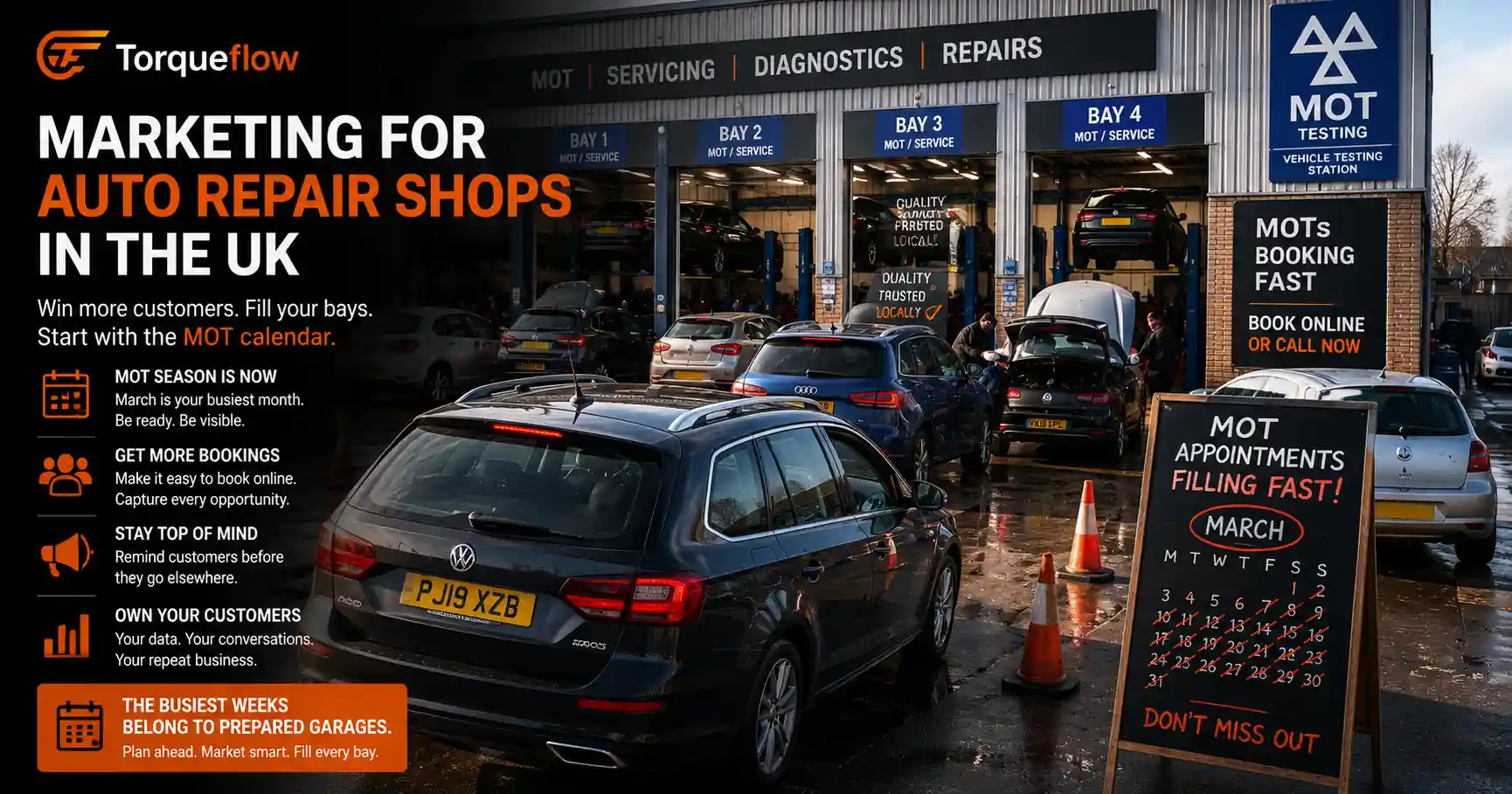
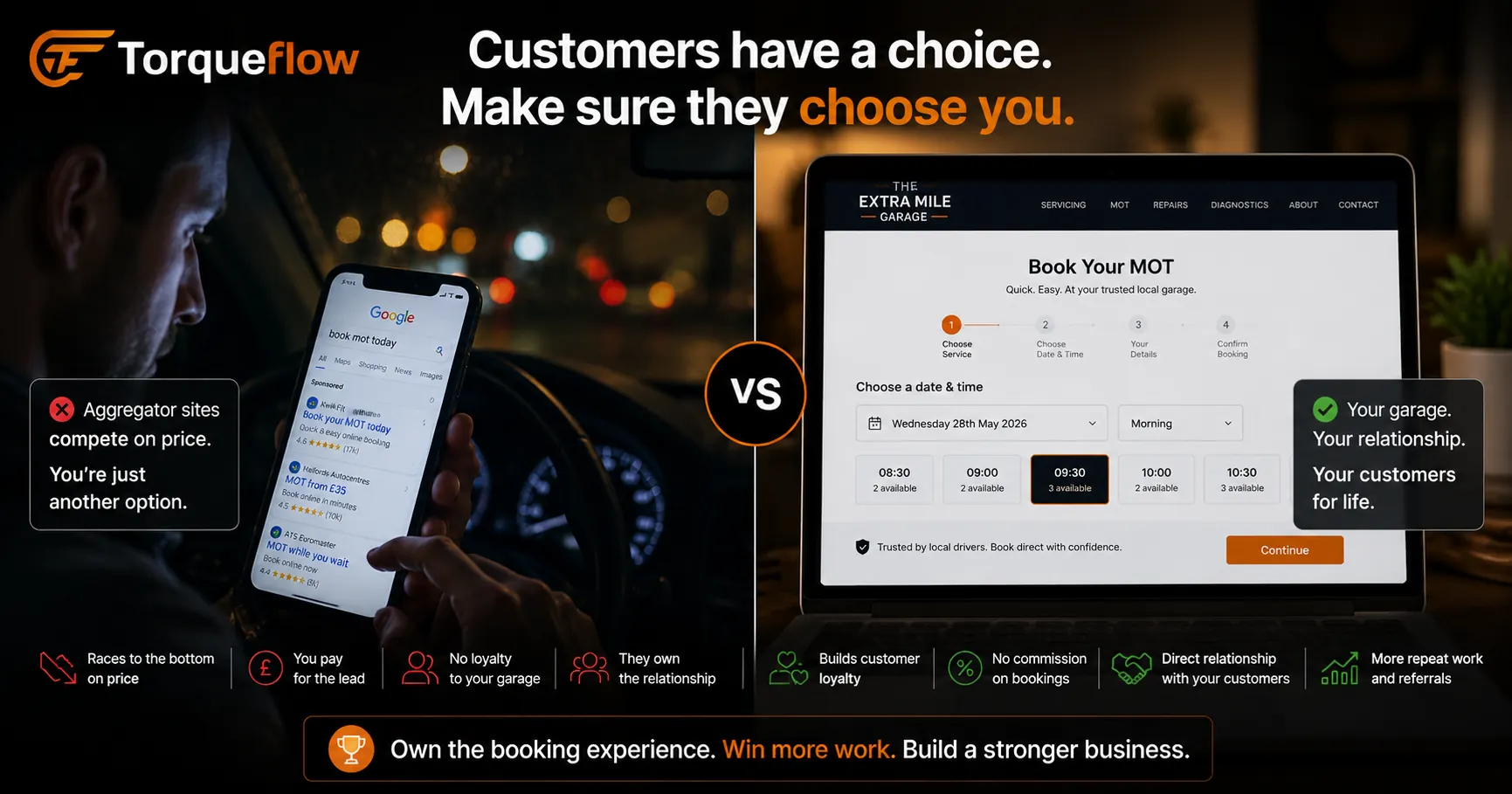
Nobody storms out of an independent garage anymore. The way customers leave in 2026 is gentler and worse: the MOT is due, life is busy, and instead of ringing the garage they’ve used for years, they type “book mot today” into a phone at 9pm. An aggregator shows them six garages with prices and open slots. They tap one. Trying a new garage used to take effort; now it’s three taps. Your customer is someone else’s customer, and the customers who leave this way never tell you.
The scale of this is measurable. Those “book it now” searches are among the fastest-growing motor trade queries in the UK, and they’re growing while searches for garage software and garage brands stay flat. The growth isn’t new drivers. It’s lapsed loyalty, at scale.
And it compounds, because the economics of retention are brutal in this trade. The old rule of thumb says acquiring a new customer costs five times more than keeping an existing customer. For a garage it’s worse than that: a loyal customer is worth £250-400 a year across the annual MOT, the annual service, and the odd repair. Over ten years, £2,500-4,000 from one household. Losing customers slowly, invisibly, one lapsed MOT at a time, is losing annual revenue you never see leave.
What BookMyGarage understood
It would be satisfying to paint the aggregator as the villain. It isn’t one. BookMyGarage solved a real problem for car owners: booking a garage used to mean phoning during work hours, getting voicemail, and trying again tomorrow. The aggregator replaced that with three taps at 9pm.
That’s the whole lesson. Convenience beats loyalty when loyalty is taken for granted. No driver ever left a garage they liked because a website had nicer buttons. They left because the garage they liked was hard to book, and an alternative wasn’t.
So the response isn’t to resent the comparison sites, and it certainly isn’t to fight them on price; commoditised listings are a race the independent can’t win and shouldn’t enter. The response is to remove the reason your own customers ever type that search. Be as easy to book at 9pm as the aggregator is. Online booking that shows real slots, on your own website, for your own customers. The aggregator’s superpower, minus the middleman.
What the dealer networks understood
Dealers are not better at relationships than independents. Nobody’s ever called a dealership service desk warm. But the dealer networks understood twenty years ago that customer retention is a system, not a sentiment, and they industrialised it.
Watch what happens when a car leaves a dealer workshop. The next service is proposed before the keys are handed back. A service plan spreads the cost monthly and quietly pre-commits next year’s visit. The MOT due date sits in their system, and the automated reminders start arriving weeks out, by SMS, email, and letter, timed to land before the customer thinks about it. The whole machine runs on one principle: never let the customer reach the moment where they’re choosing a garage from scratch.
That’s the moment the aggregator owns. The dealer’s system exists to make sure their customers never reach it. Most independents, meanwhile, finish excellent work, take payment, and say “see you next year” with nothing behind it. No followup, no booking, no reminder scheduled. Then they’re surprised when next year, the customer is someone else’s.
The galling part: the independent’s work is usually better value. The Castrol survey below says customers know it. The dealer just never lets them shop around long enough to act on it.
The independent garage’s real advantage
Here’s the data the doom narrative misses. A OnePoll survey of 1,000 UK drivers for Castrol found that 45% stay with a garage for work that’s good value, 42% for convenient location, 40% for well-trained staff, and 39% because staff explain clearly what the car needs. Just 11% stay loyal because a garage is the cheapest.
Read that list again. Value, proximity, competence, honest explanation. Every item is the independent garage’s home turf. Customers don’t want the cheapest; they want to understand what they’re paying for and to trust the person telling them. That trust is built at the counter, in the way a technician shows the worn pad rather than reciting it, and no aggregator listing can carry it. The same logic shows up in how customers talk: a Google review for an independent names a person; bad reviews for chains name a queue.
So independents don’t have a trust problem or a quality problem. They have a friction problem and a silence problem. Bad communication, or no customer communication at all, undoes everything the customer experience at the counter earned: the customer who never got a reminder, never saw the health check photos, never heard “your next MOT is booked for March” is a customer the aggregator can take. Effective customer retention for an independent isn’t about becoming the dealer. It’s about closing the two gaps while keeping everything customers already prefer.
Read what garage customers expect now →
A points scheme won’t fix garage customer loyalty
When garage owners hear “retention”, many reach for a “loyalty program”: loyalty points, stamps, a tenth-MOT-free points system. The motor trade press is full of loyalty schemes right now, and the loyalty apps pitch hard.
But a garage is a service business, not a coffee shop. Your customer visits twice a year, not twice a day, and no driver chooses where to entrust a £6,000 car based on points. The garages that retain customers do it on trust and ease, not stamps. The Castrol numbers above say the same: cheapest ranks last as a reason customers stay loyal. A discount-led loyalty strategy spends margin on people who’d have returned anyway, and does nothing for the customer about to lapse at 9pm with their phone out.
Retention in this trade isn’t a reward for repeat visits. It’s the removal of every reason to leave. That’s infrastructure, not incentives.
What retention infrastructure looks like
Strip the lessons from both teachers and the checklist for an independent garage business is short:
- Reminders that arrive where they’re read. Automated MOT and service reminders, sent by WhatsApp and SMS, scheduled from the MOT due date without anyone maintaining a spreadsheet. The lapse happens when the MOT is due and you’re silent. How to send MOT reminders that get opened →
- Booking without friction. A booking system on your own site with live slots. The 9pm customer books with you because they can.
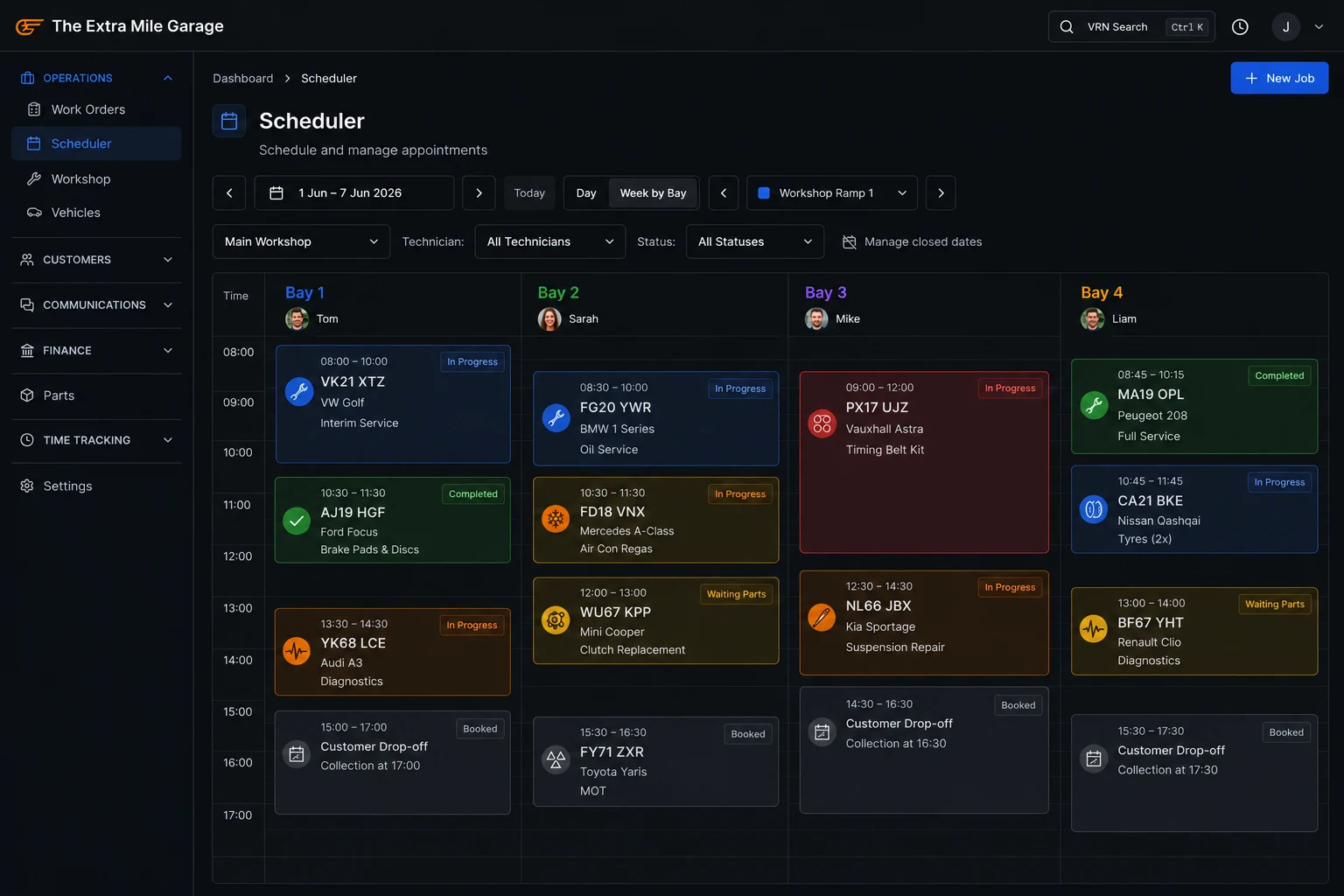
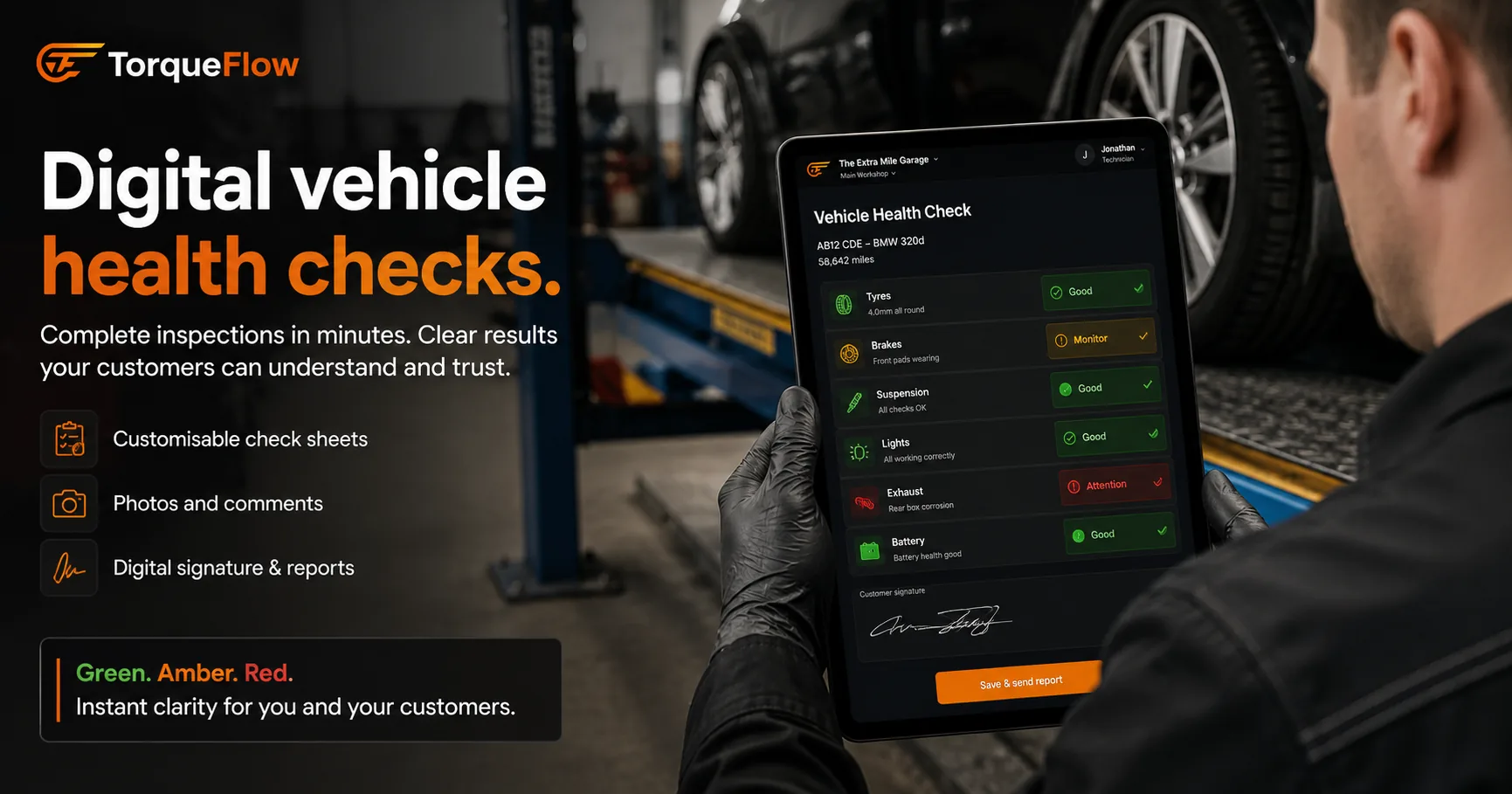
- The visit they can see. A customer portal with the vehicle history, the health check photos, and approvals from their phone. Transparent pricing and visible evidence are the digital version of showing the worn pad at the counter, and they build trust between visits, not just during them.
- The next visit, captured at this one. The dealer’s best trick, available to anyone: “Shall I book next year’s MOT now? We’ll remind you the week before.” Ten seconds at handover. It’s the single cheapest retention tool in the motor trade.
- The asking. Customer feedback while the experience is fresh, and a nudge to leave a review from the customers who are glad. Repeat business and referrals come from the same place: customers who were asked.
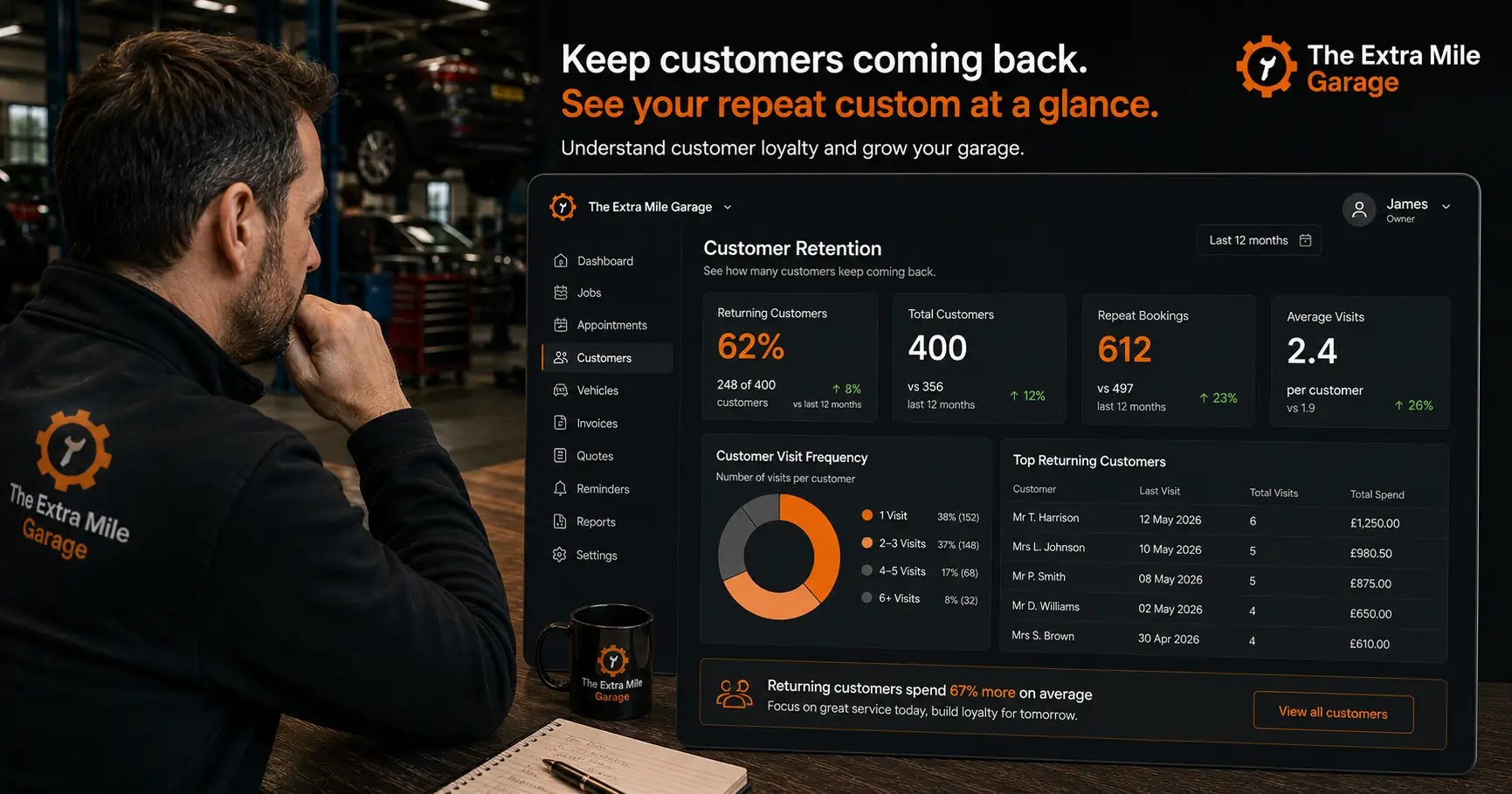
None of this requires a marketing department or a waiting area refit. It requires the system behind the counter to do the remembering, automatically, for every customer, every time. Keeping your customer base intact stops being an act of memory and becomes the default. The practical, step-by-step version is in our retention guide: how to keep customers coming back to your garage →.
The relationship is yours to lose
The aggregators didn’t steal anyone’s customers. The dealer networks didn’t either. They both just refused to rely on the customer remembering, and built machinery for the moments when memory fails. The independent garage still holds the cards that matter: the trust, the value, the face the customer knows. New customers are nice; keeping the ones who already trust you is the business.
The machinery is now available to a two-bay independent for less than the margin on one service or MOT a month. We built Torqueflow’s retention layer, the reminders, the booking, the portal, because excellent customer work deserves better than a silent gap the aggregator fills. Book a Demo and we’ll show you the loop running: reminder out, booking in, next visit captured.
Torqueflow keeps your customers yours. Automated MOT reminders, online booking, customer portal.