The Independent Garage Industry in 2026: What’s Changed and What Hasn’t
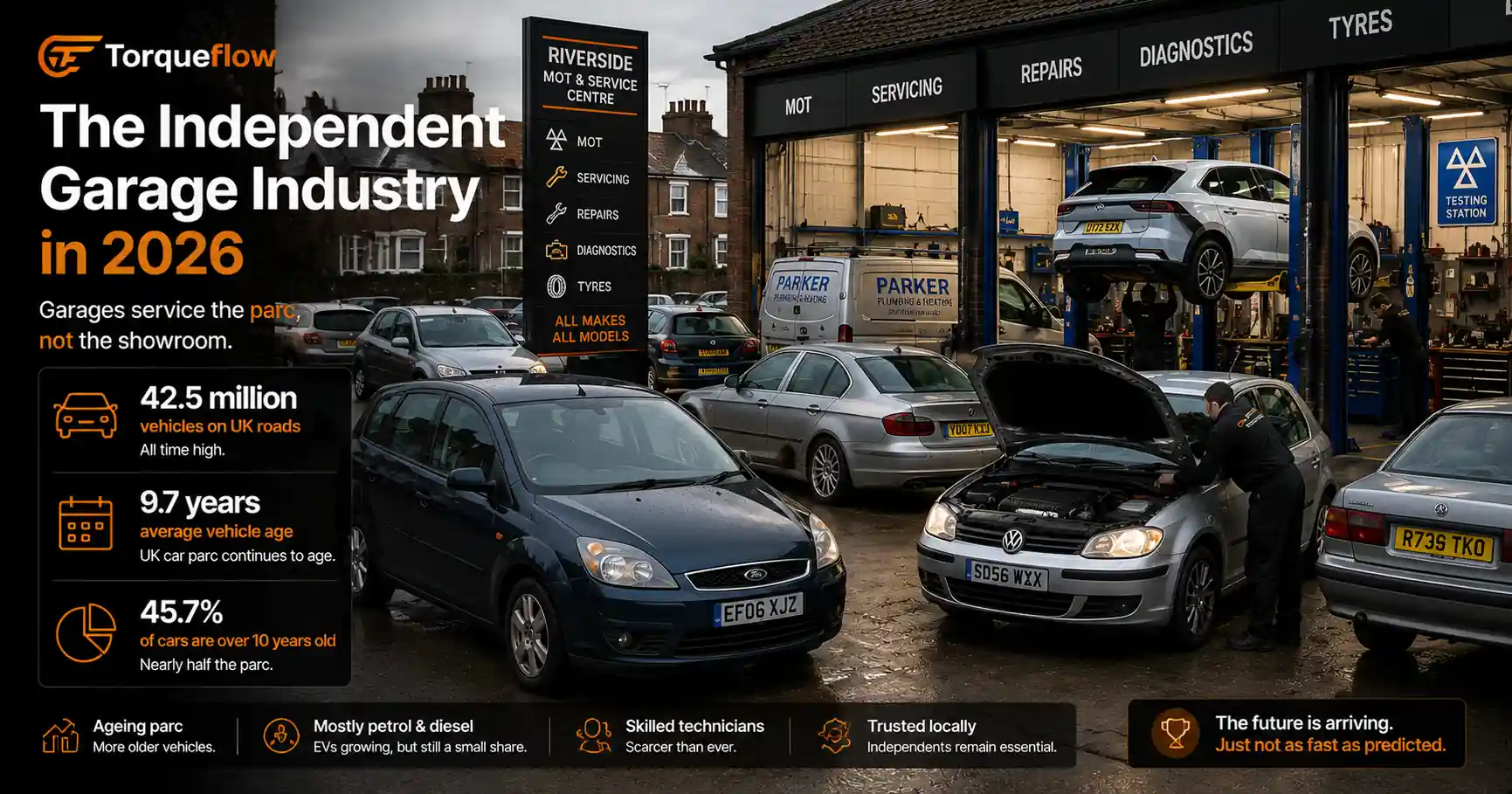
The independent garage industry was supposed to be dying by now. Electric cars were going to erase servicing revenue, dealer groups were going to hoover up the work, and the local garage was a relic on a countdown. Then 2026 arrived with a record 42.5 million vehicles on UK roads, the average car nearly ten years old, and 95% of the parc still not battery electric. The sector’s real problems turned out to be different ones, and mostly nobody warned about them.
Here’s the state of the trade, with numbers rather than conference-stage predictions.
The prediction that didn’t arrive on time
The wider automotive industry keeps forecasting its own revolution. The SMMT’s 2025 Motorparc data describes the fleet that actually rolls into independent workshops, and it doesn’t look like the keynote slides. Car ownership keeps climbing: a record 42,549,649 vehicles in use, cars up 1.4% to 36.7 million. Average car age sits at 9.7 years, with a record 45.7% of cars more than a decade old.
And the electric transition? Real, but on the road it’s still a minority sport. Battery electric cars passed 1.8 million in 2025, up 34.7% in a year, which sounds dramatic until you notice it’s slightly under 5% of the car parc. Around one in nine vehicles is electrified in some form once you count every hybrid; roughly one in 22 is fully zero-emission.
This is the number that matters for anyone who fixes cars for a living: garages service the parc, not the showroom. New car sales headlines describe what the trade will work on in 2035. The parc describes the work in the bays this morning, and this morning it’s overwhelmingly petrol and diesel, getting older, and needing more repair, not less. An ageing fleet is, bluntly, good news for the vehicle repair business. Cars over a decade old don’t visit the dealer.
So if your business plan was “panic about EVs”, the data suggests a calmer posture: prepare deliberately, don’t bet the centre of the business on a date the parc keeps pushing back.
The shortage that did arrive
While everyone watched the electric vehicle threat, the actual challenge crept in through the staff room: there aren’t enough technicians, and the gap is widening. Nobody put this one on a slide.
The Institute of the Motor Industry’s figures put it starkly. As of late 2025, 74,734 technicians hold an EV qualification, about 35% of the workforce. That sounds like progress until you see the direction of travel: certifications in Q4 2025 ran 17% below the year before, and the IMI projects demand could exceed supply by more than 43,000 technicians by 2035, a gap it warns puts motorist safety at risk. The IMI calls 2026 a crossroads for the skills gap, and the EV capability that does exist clusters in the dealer chains rather than the independent garage sector, keeping the expertise where independents can’t easily hire it.
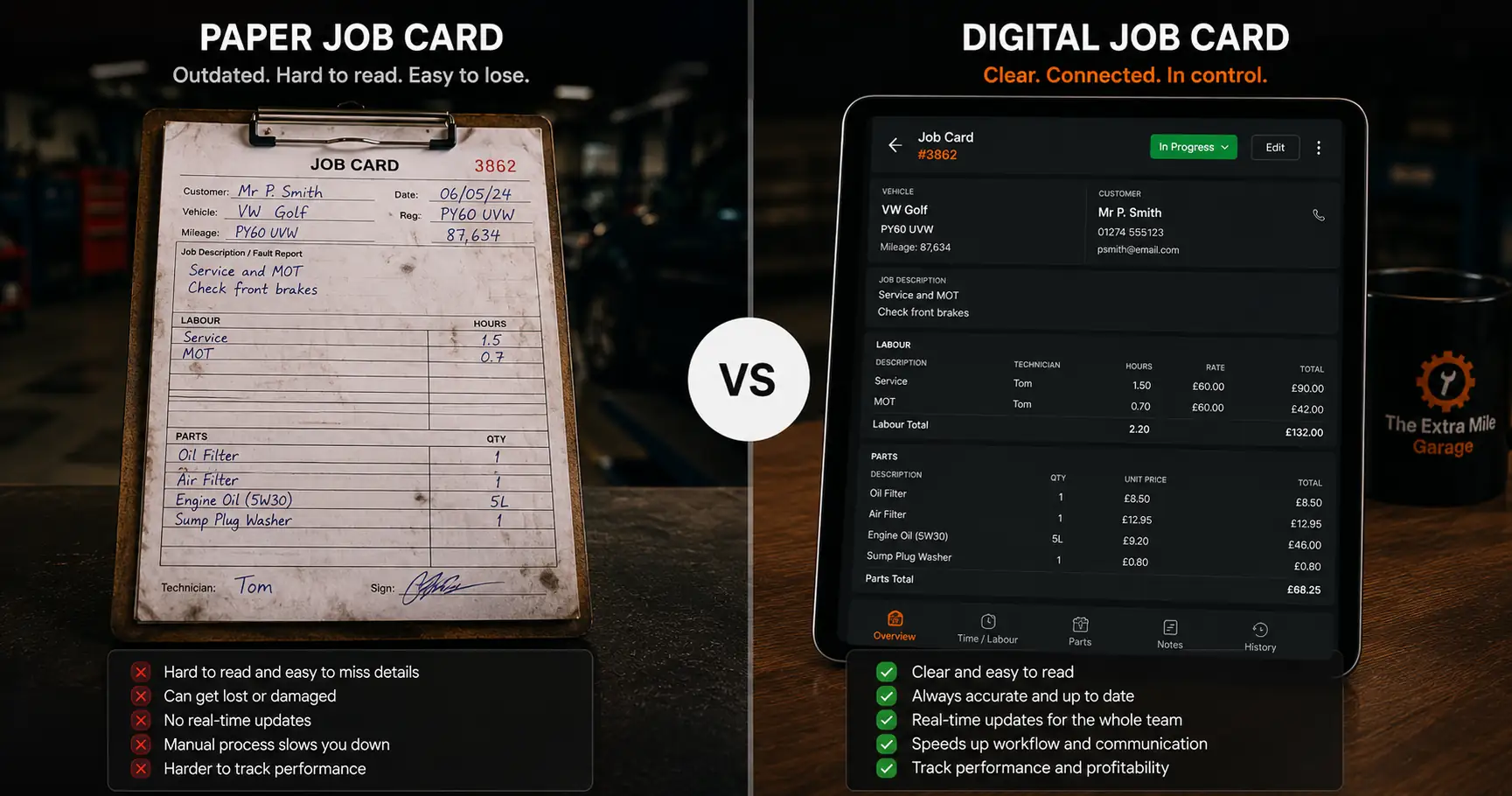
For an independent, this changes the maths of growth. A skilled technician is now harder to replace than a customer. Which makes it strange that so much of the sector still spends its scarcest resource, skilled hours, on its least valuable activity: typing, chasing, and answering the same phone call eleven times a day.
You can’t conjure technicians. You can stop wasting the ones you have on admin. In a shortage, that’s not a productivity tweak; it’s a hiring strategy you don’t have to hire for.
The quiet fight over the car’s data
The third change is the least visible from the forecourt and may matter most by 2030. Modern vehicle maintenance increasingly runs through software: diagnostics, service resets, in-vehicle data the manufacturer controls.
The legal scaffolding that keeps independents in that game is the Motor Vehicle Block Exemption, the rules that stop manufacturers locking service and repair information away from anyone outside their franchised network. When the UK reviewed it, the Independent Garage Association, which represents over 35,000 independent garage businesses, pushed hard for in-vehicle data and software to be explicitly protected, warning that without it manufacturers could quietly monopolise everyday service work.
That fight rarely makes the trade-show stage, but it’s the difference between an open aftermarket and a closed one. The IGA’s argument to the regulator was simple: consumer choice for service, maintenance and repair only exists while independents can access what the car knows. Every garage owner has a stake in how that exemption evolves, whether they follow the policy detail or not.
What customers changed (without asking anyone)
The fourth shift came from drivers, not the trade or the regulator.
The evidence on why customers choose and stay with an independent hasn’t moved: a OnePoll survey of 1,000 UK drivers for Castrol found good value (45%), convenient location (42%) and clear explanations (39%) top the list, with “cheapest” trailing at 11%. Trust and competitive pricing still beat everything. That’s the part that hasn’t changed, and it favours independents over any chain.
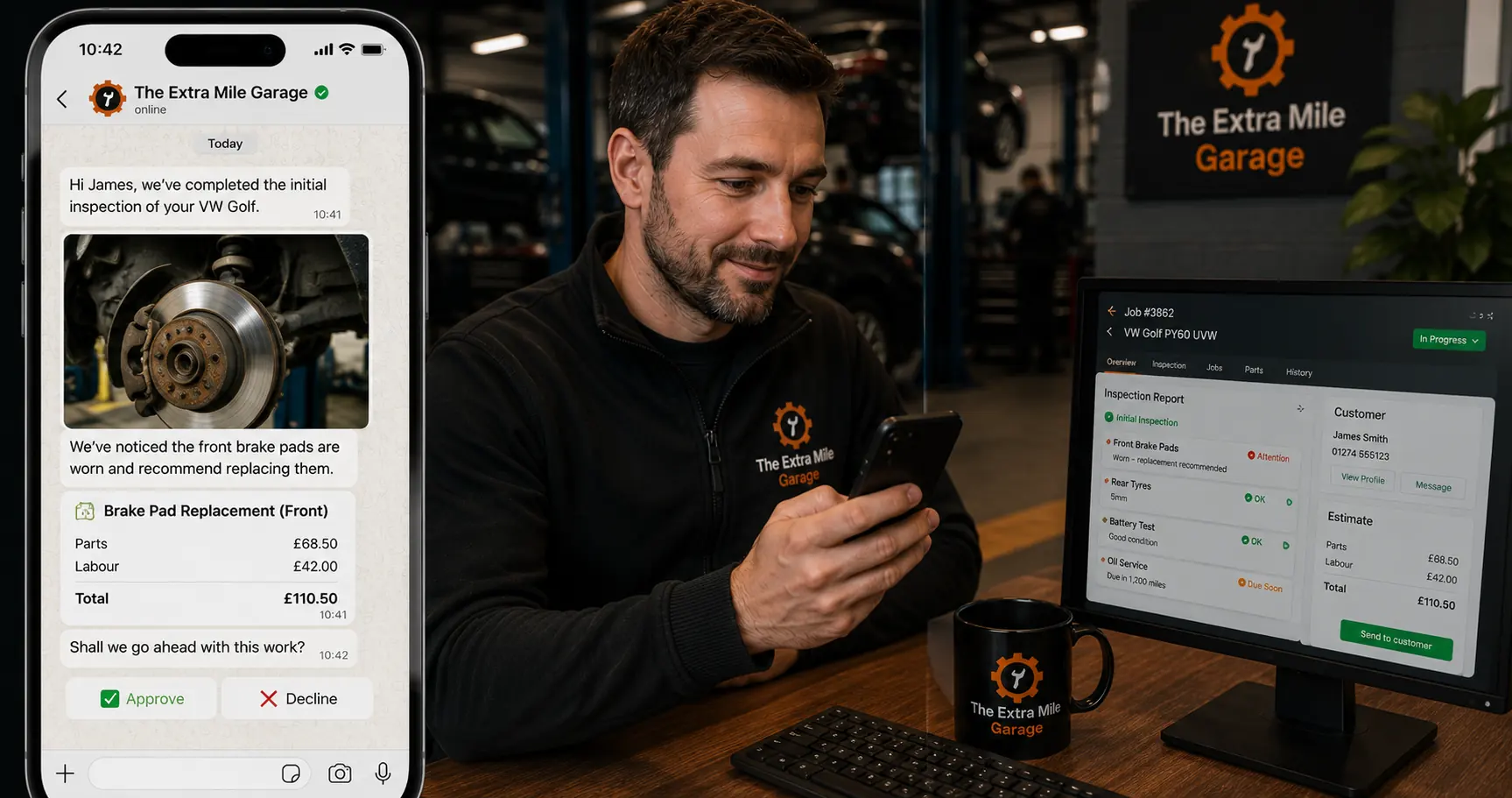
What changed is how drivers act on it. They book at 9pm. They message instead of ringing. They compare three garages on a phone screen and choose whoever responds first. The customer relationship that used to live at the counter now partly lives online, and the rise of the businesses that industrialised that layer first wasn’t driven by garages at all: it was booking aggregators and dealer groups with marketing departments. We’ve written up what that shift teaches about customer loyalty → separately, and the short version is that the threat to an independent’s customer base isn’t the EV or the dealer’s workshop. It’s friction.
The trade press talks about this as rising customer expectations, and what garage customers now expect → is its own subject. But the one-line summary: drivers stopped grading garages against other garages. They grade every business against the easiest app on their phone.
What hasn’t changed
Plenty, and it’s worth saying because doom sells conference tickets.
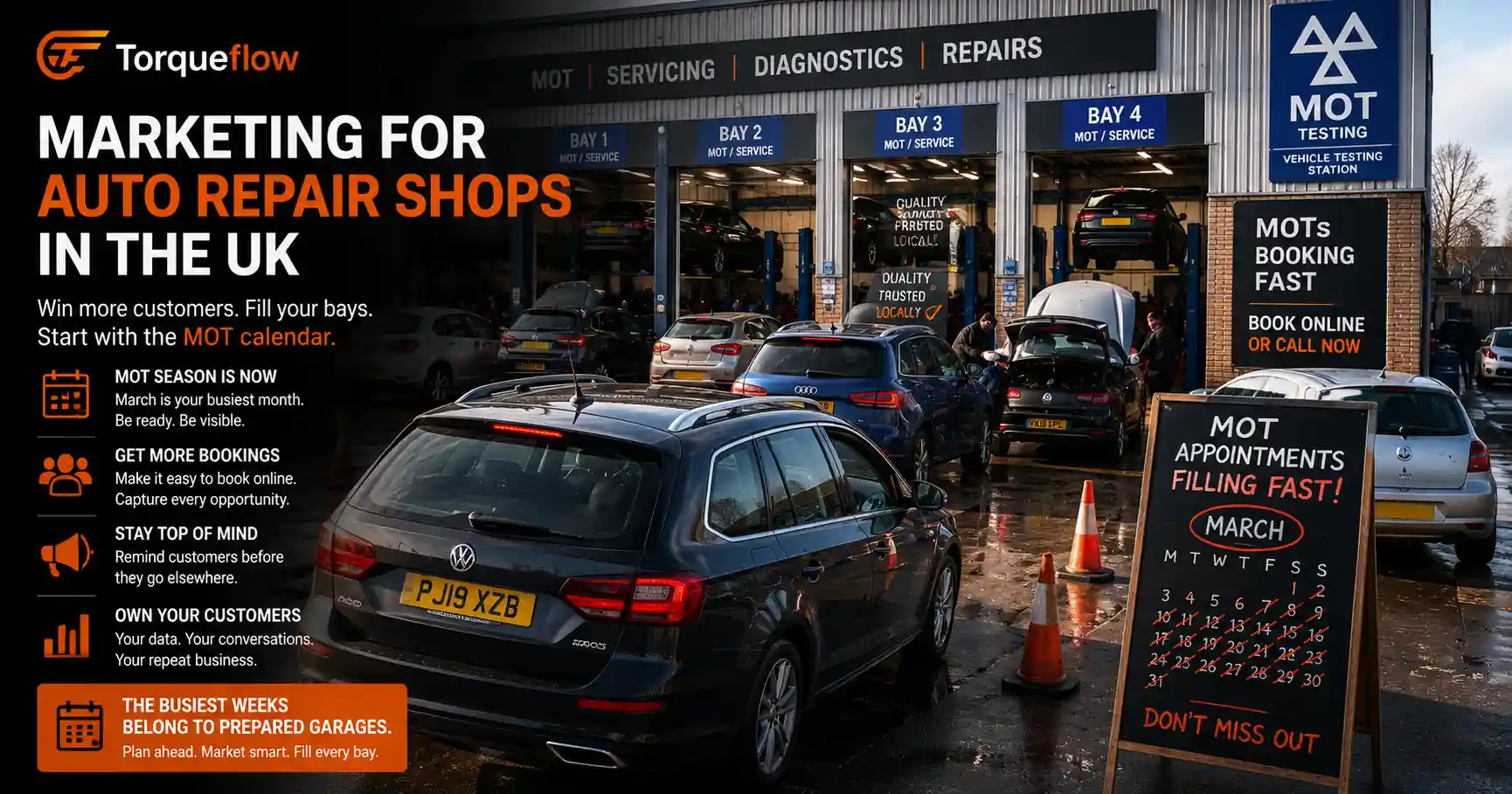
The MOT test remains the anchor of the trade: a legally required annual visit that no subscription service or over-the-air update can replace, feeding diagnosis and repair work to whoever holds the customer relationship. DVSA-regulated testing keeps the vehicle repair sector structurally relevant in a way few industries enjoy.
The independent’s core advantages also haven’t moved. Local, trusted, transparent on pricing, cheaper than the franchised dealer, and able to specialise. Drivers know it: the loyalty research above says value and trust, not badges, decide where the car goes. And the motor trade’s independent end remains huge and stubborn: tens of thousands of independent workshops across the UK, from one-bay specialists to multi-site operations, still doing most of the country’s SMR work on a parc that keeps growing and ageing in their favour.
No trade-body CEO will put it this bluntly, so we will: the independent garage industry’s fundamentals are fine. The fleet is ageing toward it, the work is there, and the customer research keeps endorsing it.
The actual dividing line for 2026
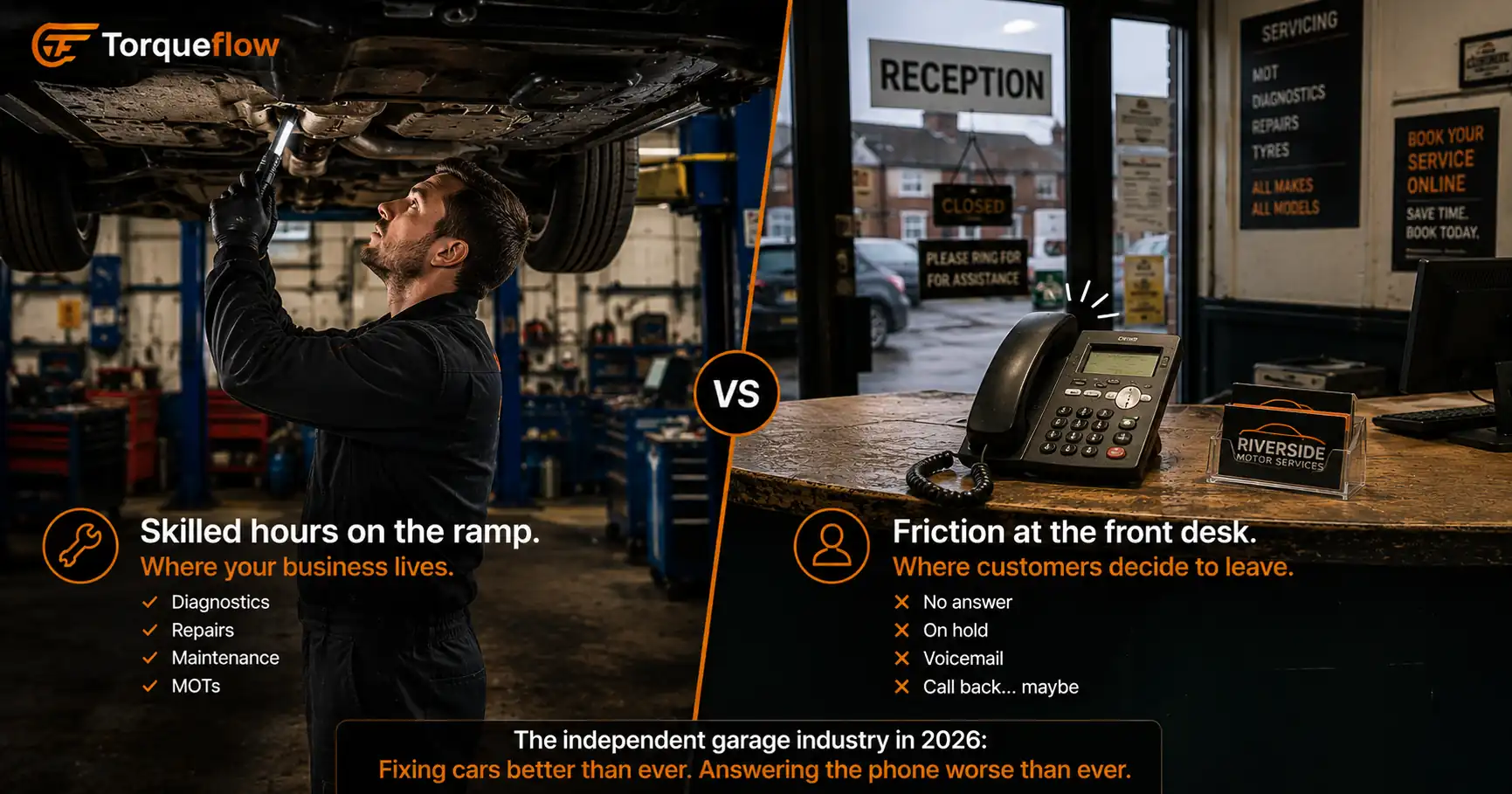
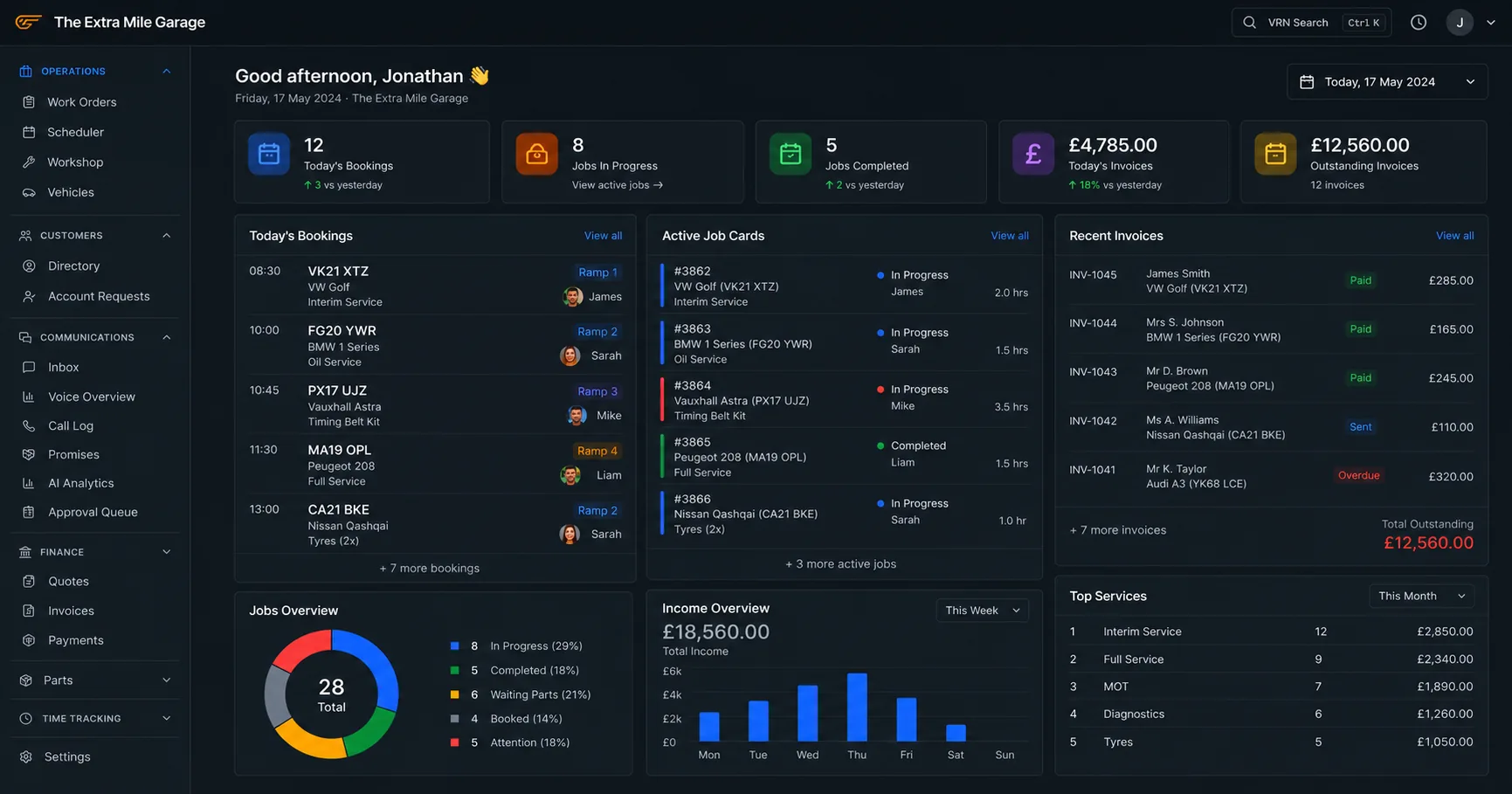
So what separates the garages that will thrive from the ones that won’t? Not EV readiness timelines. Not surviving some imagined dealer onslaught. On the evidence, the dividing line is operational: who answers the customer, captures the booking, invoices the work, and holds the relationship with the least friction, using the fewest skilled hours.
That’s an unglamorous conclusion for a state-of-the-industry piece. It’s also the one the numbers support. The parc guarantees the demand. The technician shortage punishes wasted hours. The aggregators punish silence. Every trend affecting independent garages this year points at the same place: the front desk, not the ramp.
The trade gathers at the UK Garage and Bodyshop event every summer to hear about the future. The garages winning 2026 are the ones who fixed the present: they invest in the boring layer, the phone, the bookings, the reminders, the paperwork, and bank the hours.
Plenty of them started by working out how to digitise workshop bookings instead of running Tuesday morning off a wall planner. How AI is quietly doing that job is the companion piece to this one.
We built Torqueflow in 2026, for exactly this version of the industry: the one that’s busy, understaffed, and competing on responsiveness rather than robots. If that’s the trade you recognise from your own forecourt, book a demo and see what the front desk looks like when it runs itself.
Torqueflow runs the front desk: bookings, reminders, invoicing, and an AI that answers the phone.