Voice AI for Garages: What Pros Know About Call Escalations in 2026
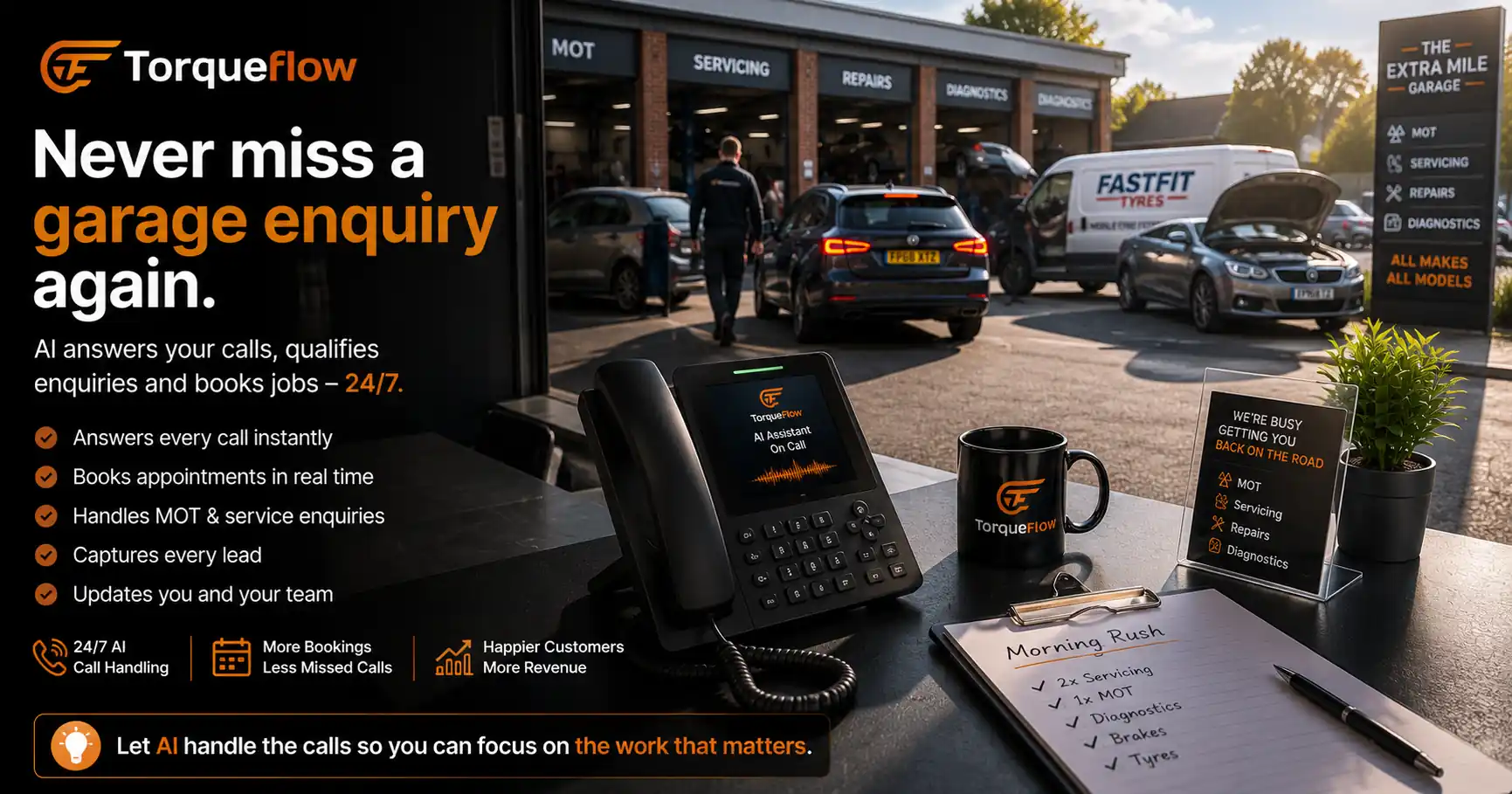
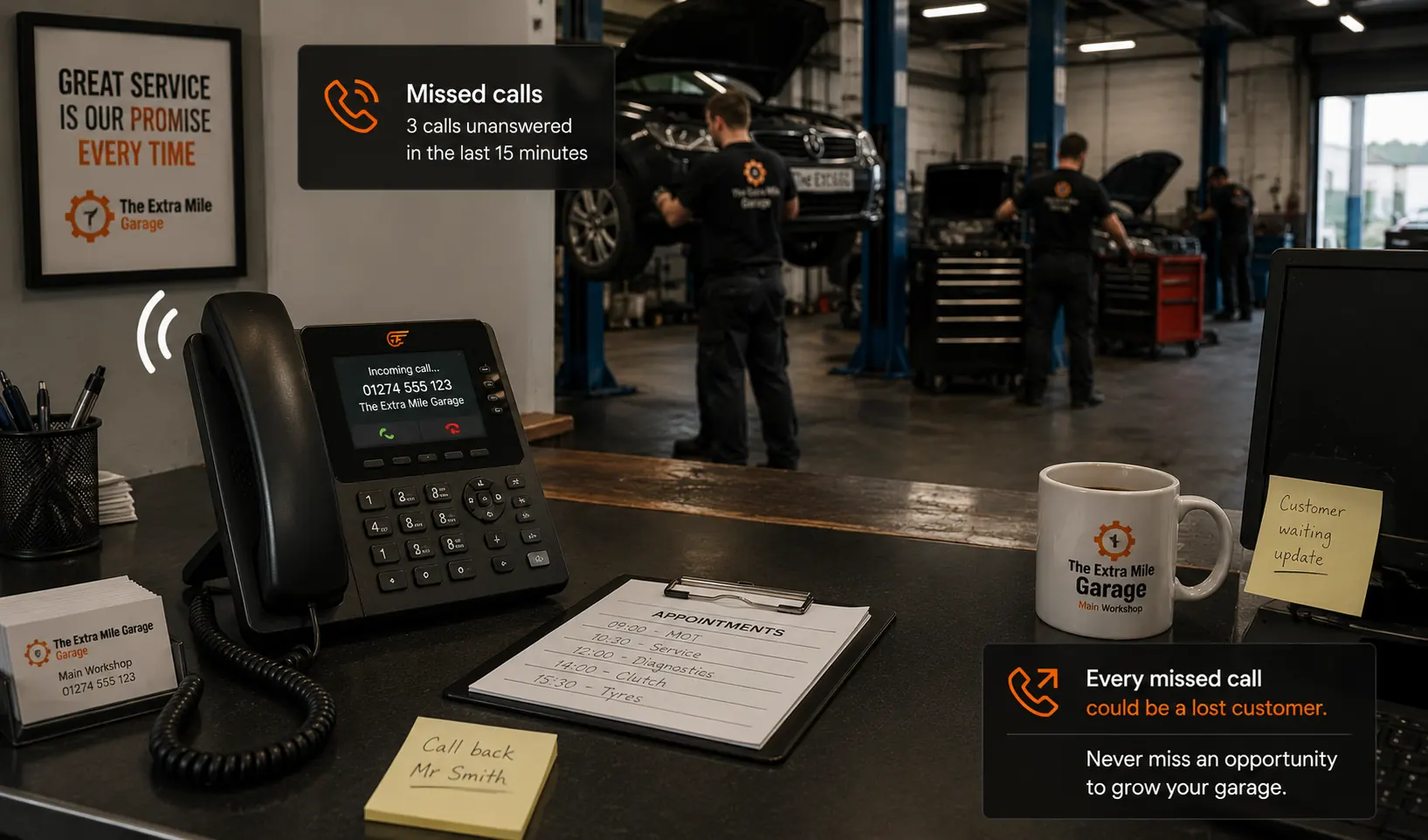
An answering machine picks up on the sixth ring. By then the customer has usually hung up and dialled the garage down the road.
That’s the gap Voice AI closes. And the workshops running it well have worked out something the rest of the trade is still catching up on: the clever part was never the answering. It’s the handoff.
Modern Voice AI deals with the routine calls without a person. The bookings, the “is my car ready”, the MOT dates. What it can’t deal with is the small slice that genuinely needs a human. Call it one call in twenty. That one is almost always the one that matters.
If you’re still running a wall planner, a paper diary, and a mobile that rings while you’re elbow-deep in an engine bay, this is the part of your garage management software that changes the most, and the fastest, in 2026.
Key takeaways
| What to know | Why it matters |
|---|---|
| Voice AI answers most routine calls without a human | Bookings, status checks and MOT queries stop eating your advisor’s morning |
| A good handoff happens while the customer is still talking | No cold transfer, no “can you repeat that”, no lost thread |
| The calls it can’t handle are usually the important ones | Complaints, warranty disputes and price objections need a human ear |
| Every missed call is a missed booking | Miss three or four on a busy Friday and that’s a few hundred pounds of work gone elsewhere |
| Escalation rules live inside your workshop system, not a bolted-on app | One source of truth, so nothing gets lost between the call and the job card |
What the pros already know
The people running multi-bay workshops with call volumes that would make your head spin worked this out early: Voice AI was never meant to handle every call. It was built to handle the boring ones.
The “what time’s my car ready” call. The “can I book my MOT for next Tuesday” call. The “has my part arrived yet” call. That’s the bulk of what rings your phone every day. Take that noise away and your team is left with the calls that actually need a person, a decision, or an apology.
The skill isn’t in the answering. It’s in knowing exactly which calls to pass along, and doing it before the customer even notices a handoff happened.
Why escalations happen in the first place
If you’re running your garage on paper job cards, a wall planner, and a spreadsheet for invoicing, you already know it isn’t working.
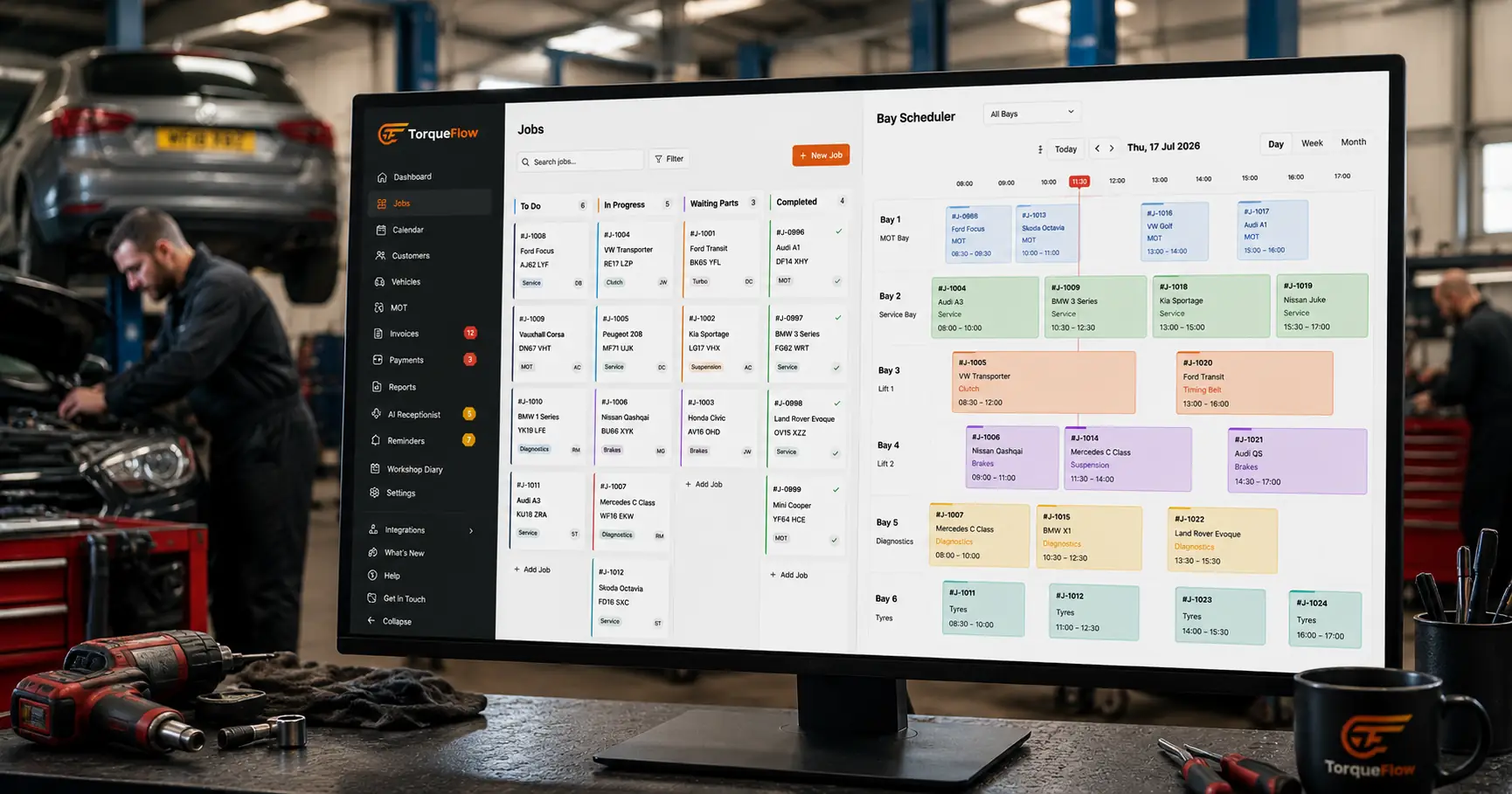
The diary doesn’t tell you which bay is free. The invoice doesn’t link to the job card. The WhatsApp conversation doesn’t show up in the customer record. So when someone calls to ask about their car, whoever picks up has to guess, ask around, or stick them on hold while they hunt for a paper file. That isn’t a workshop problem. It’s an information problem, and it’s the single biggest reason escalations feel chaotic instead of routine.
The typical UK garage in 2026 runs a paper diary for bookings, a separate invoicing system (or Word templates), WhatsApp on the front-desk phone, and whoever happens to be free to answer the landline. None of it talks to the rest.
How Voice AI handles the call before it becomes a problem
A properly built Voice AI does three things before a call gets anywhere near your advisor’s desk.
- It answers instantly, every time, no matter how many calls are stacked up
- It checks the booking, the MOT date, and the job card in real time
- It decides, on the spot, whether the caller needs a quick update or a human being
None of that makes the customer repeat themselves. The AI reads the same job card your technician is looking at, so it knows the car’s in bay two waiting on a part, not vaguely “in for a service”.
That’s the difference between a receptionist bolted onto your phone line and Voice AI wired into your garage booking system. One guesses. The other knows.
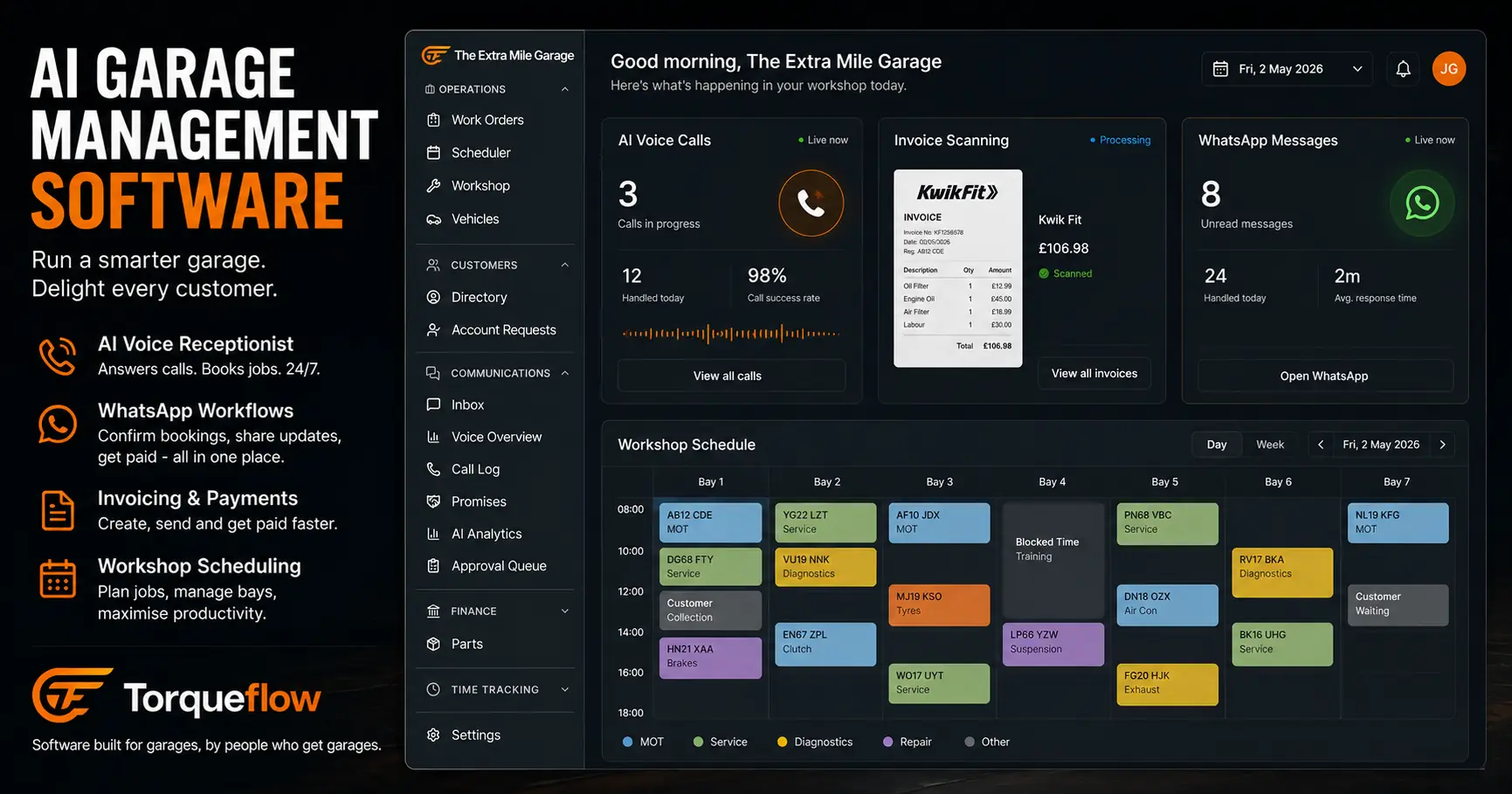
Where Voice AI fits into your garage management software
On its own, Voice AI is a gimmick. Connected to your garage management software, it’s a genuinely different way of running the front desk. Day to day, that connection looks like this:
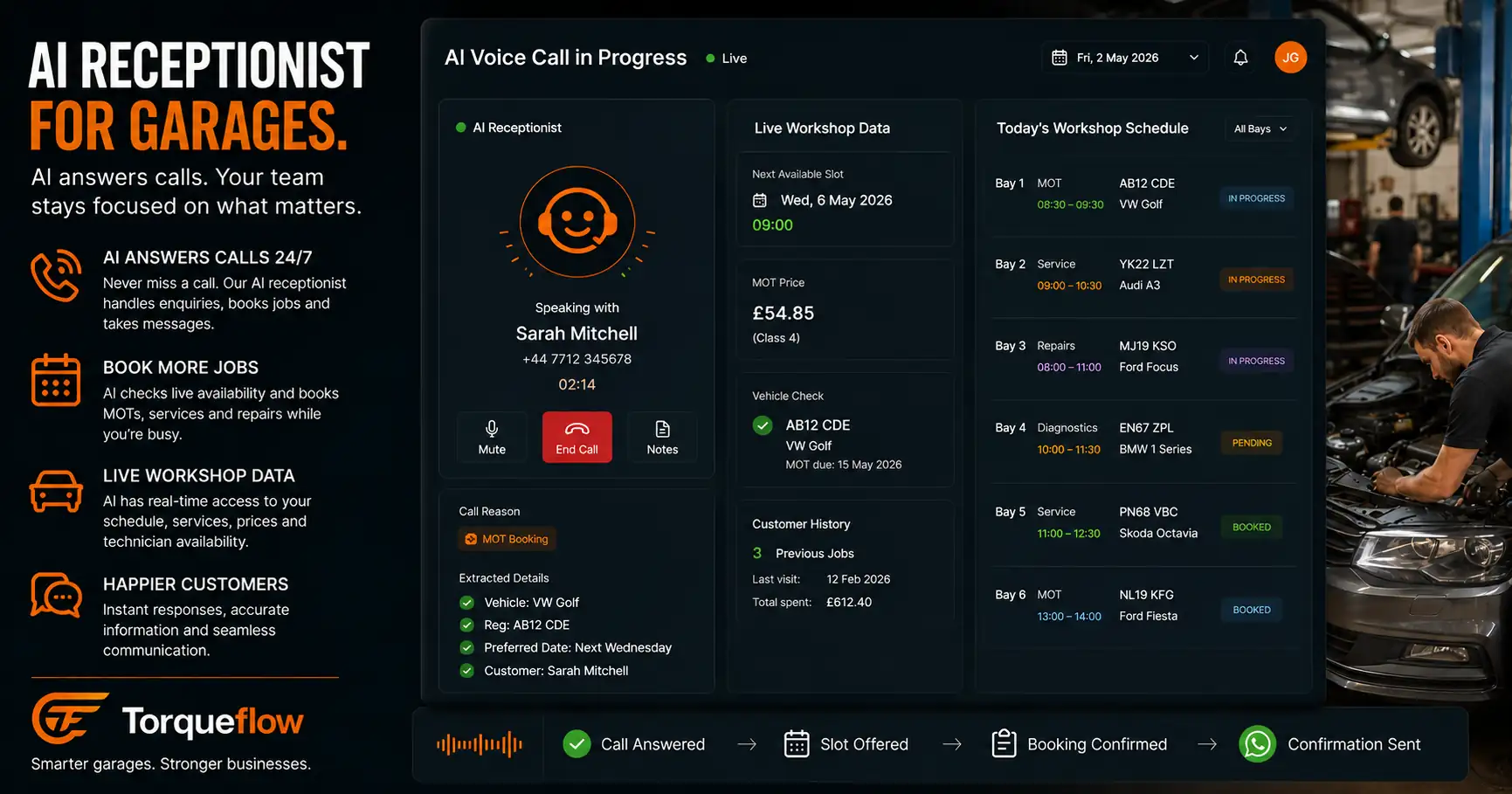
- A customer calls about their MOT. The AI checks the due date, offers a slot, books it, and updates the MOT management calendar. Nobody touches a keyboard.
- A customer asks if their car’s ready. The AI reads the job card status on the workshop management board and gives a real answer, not “I’ll get someone to call you back”.
- A customer rings to complain about a bill. The AI hears the tone, stops trying to be helpful, and hands off to a person in seconds.
It isn’t complicated. The AI takes admin off your plate. Phones answered, quotes scanned, replies sent. The calls that need a human land on a human straight away, not after three rings of hold music.
When Voice AI can’t handle the call
This is the part most vendors gloss over, and it’s the part that actually matters.
Good escalation design isn’t about the AI being clever enough to handle everything. It’s about the AI being honest enough to know what it can’t. The small share of routine calls it gets wrong are rarely trivial. They’re the complaints, the warranty disputes, and the price objections that need a human ear and a human decision.
A well-built system passes those along with full context. Your advisor doesn’t pick up to “hi, how can I help”. They pick up already knowing the caller’s name, their vehicle, and why they’re upset. That’s the whole point of a proper handoff. It happens while the customer is still on the line, not after a minute of hold music and a cold transfer. No “can you repeat that”. No lost thread.
MOT season is where it proves itself
MOT season is where call handling either earns its keep or falls apart. Every garage knows the phone doesn’t stop ringing in the run-up to a reminder wave.
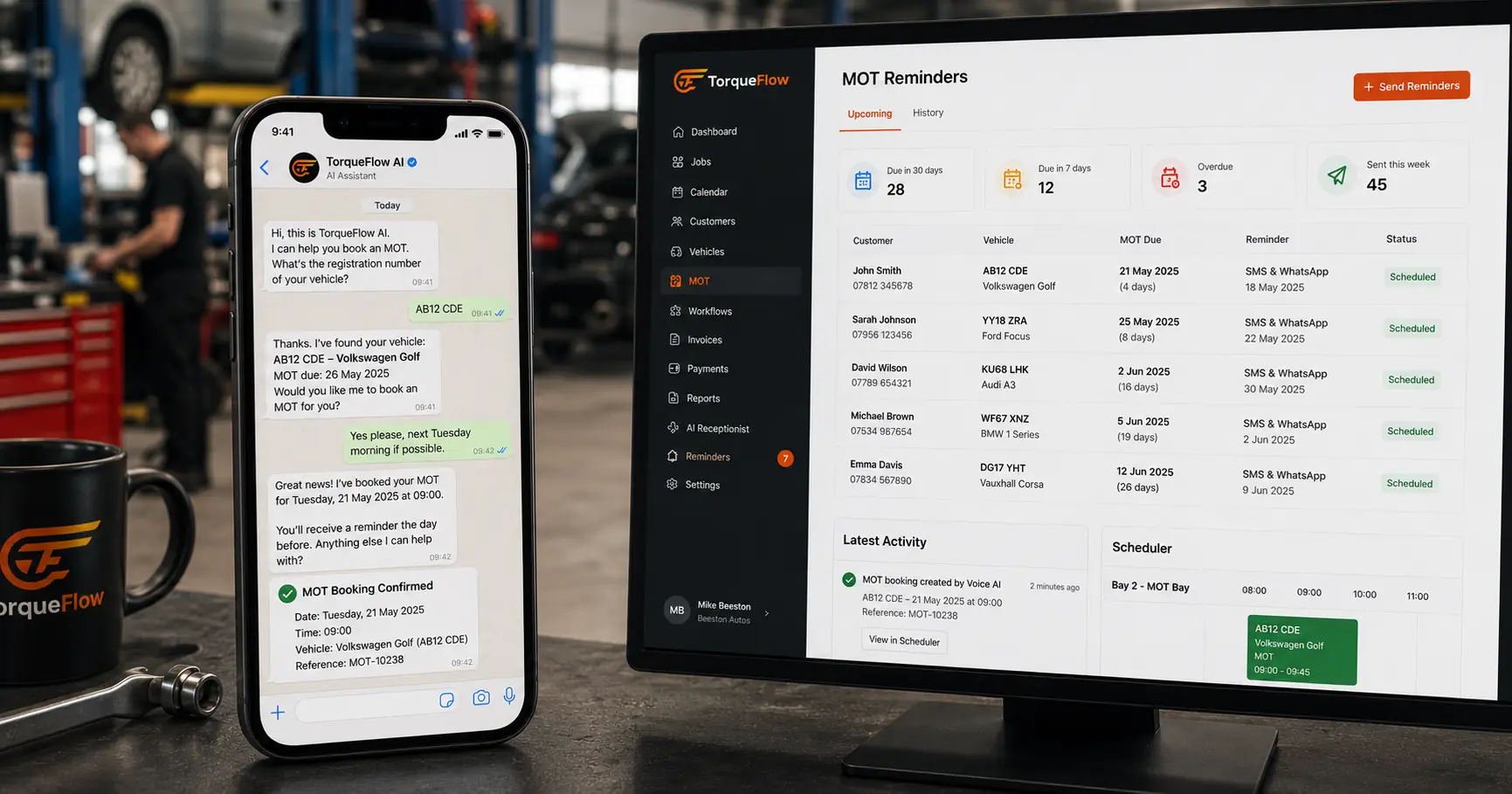
Voice AI takes the booking calls, checks the MOT due date, confirms a slot against the scheduler, and logs it straight in. No technician gets pulled off a car to answer a phone about a date they’d only have to look up anyway.
The escalation kicks in when something doesn’t line up. The slot the customer wants clashes with a bay that’s already booked, or the details don’t match the record. Then it’s handed to your front desk with everything attached, not a blank “someone called about an MOT” note on a sticky pad.
One caveat worth knowing: the AI books for customers it can recognise. If the caller isn’t on your records yet, it can still check availability and quote prices, then hand off so a person can set them up. That’s by design, not a gap.
Missed calls and the invoice you never raise
Missed calls don’t just annoy customers. They cost money.
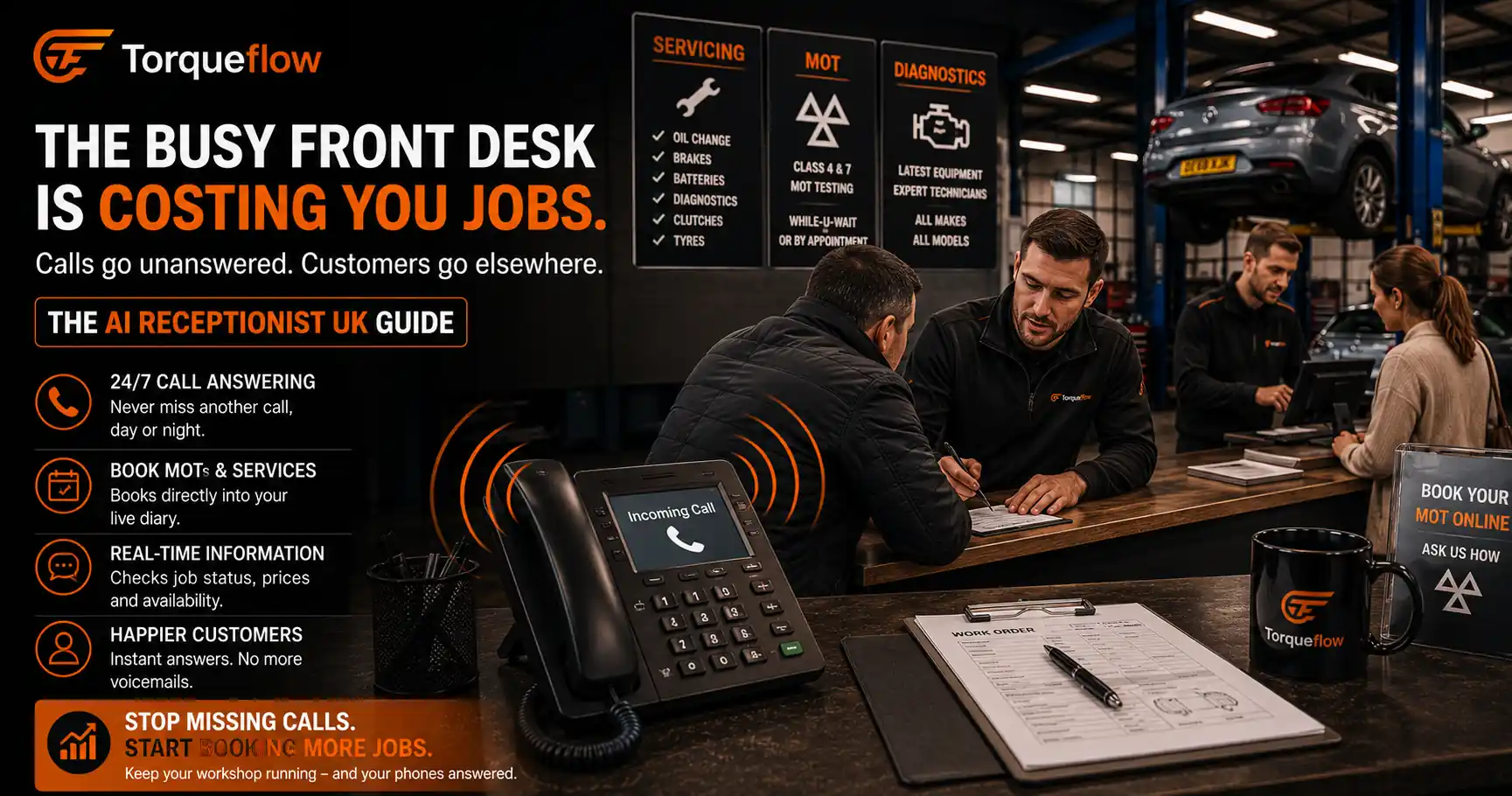
Every unanswered call could be a booking, and every booking that never lands is work that never makes it onto an invoice at all. Miss three or four on a busy Friday afternoon and that’s easily a few hundred pounds of labour and parts ringing the garage down the road instead. Then there’s the Friday scramble on the other end, where someone’s trying to remember what was agreed on the phone three weeks ago.
Proper garage invoice software reads from the same record the Voice AI does. If a customer called to query a charge, that call log sits against the invoice, not buried in a separate system nobody checks. Pair it with AI invoice scanning for your supplier costs and you’ve closed the loop between what was said on the phone and what actually gets billed.
What to check before you buy
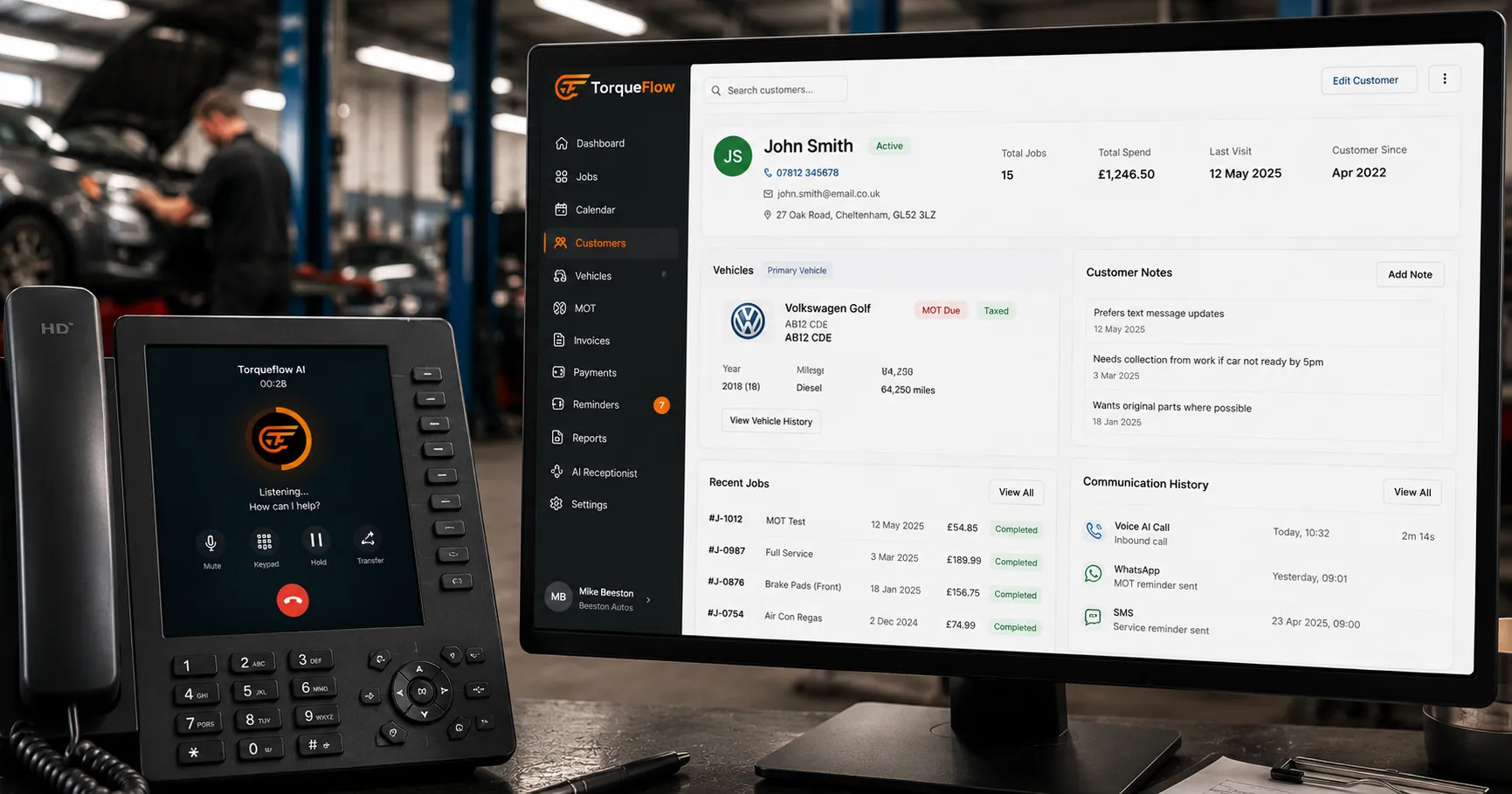
Going digital doesn’t mean buying five separate tools and spending six months learning them. It means picking garage software where the phone, the booking system, the job card, and the invoice all read from one source. A few things worth checking before you commit:
- Does the Voice AI read live job card and bay data, or is it a glorified voicemail script?
- Can it handle MOT bookings without a person double-checking every slot?
- Does an escalated call arrive with context, or does your advisor start from zero?
- Is pricing per bay, or does it lock you into a heavyweight tier you don’t need?
- How long does the switch actually take, days or months?
We put Torqueflow up against the bigger names in the trade, including the Torqueflow vs Garage Hive breakdown, because a comparison that obviously over-pitches one side helps nobody. You don’t need to go paperless overnight. But you do want a system built AI-first, not one that bolted a chatbot onto a twenty-year-old platform after the fact.
The split that actually matters
Not long ago, a service advisor could lose three or four hours a day to routine scheduling and status questions. That’s time that should have gone to the customers standing at the counter, or the jobs waiting on a decision.
Get the split right and it stops being a problem: the AI handles the volume, your people handle the judgement calls. Let it answer the phone, book the MOTs, and read the job cards. Let it spot the calls it can’t take and pass them along instantly, with context attached, not a blank message slip. Do that, and your front desk stops being the bottleneck it’s been for years.
Want to see it answer a real call? Book a demo and we’ll walk it through your actual phone flow.
Frequently asked questions
Never Miss Another MOT Booking
Every unanswered call is a missed opportunity. See how Torqueflow answers enquiries, books MOTs, updates your diary and keeps your workshop full – all without adding to your team’s workload.